
The collapse of a paying guest (PG) accommodation in Delhi’s Satya Niketan that killed seven students has once again raised questions about building safety in India’s cities.
All were rescued, but the incident has renewed attention on building safety and construction standards. Official data from NCRB shows that structural collapses are not isolated events. The human cost of these incidents remains high. A state-wise analysis shows that the burden is unevenly distributed.
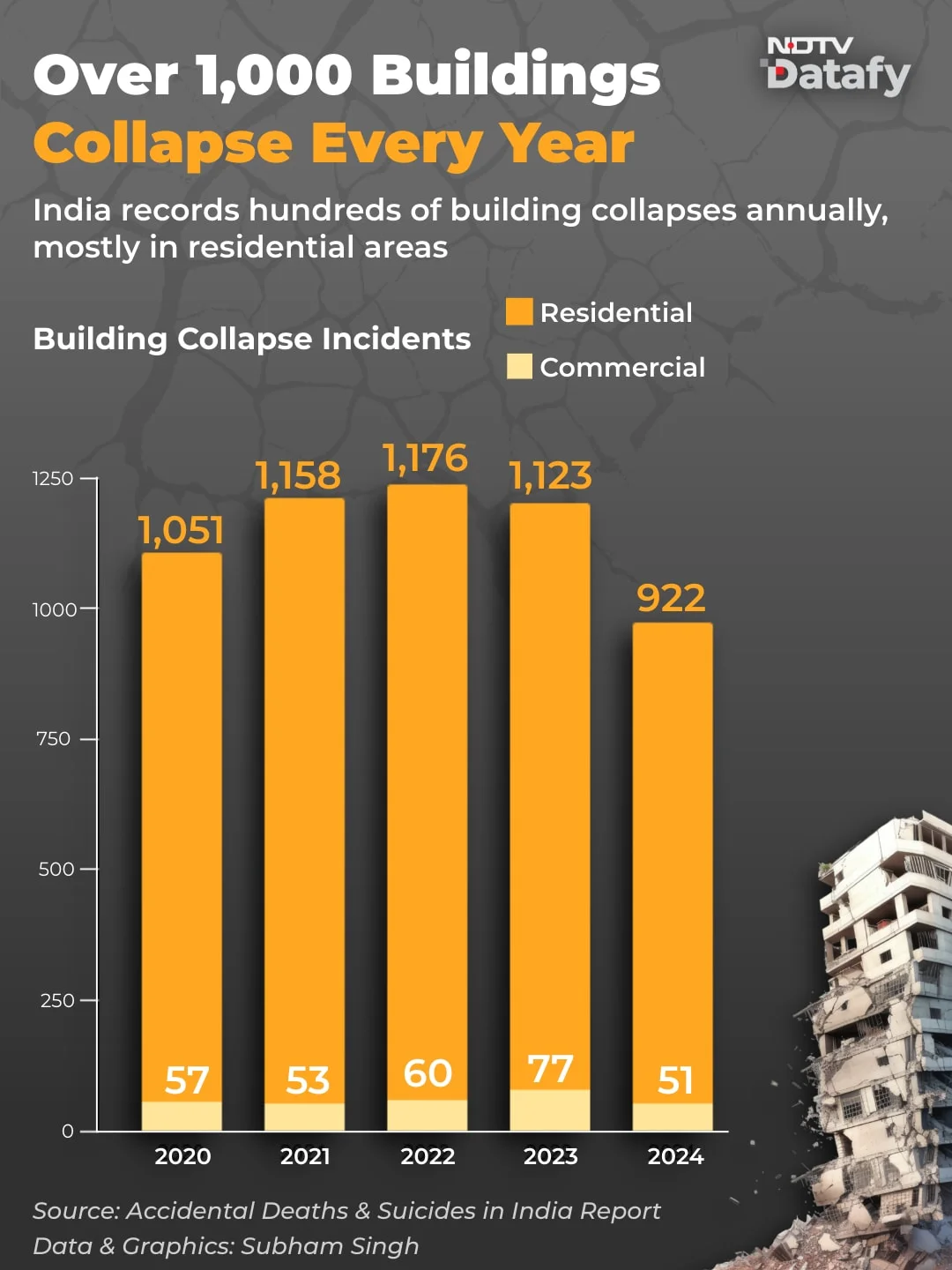
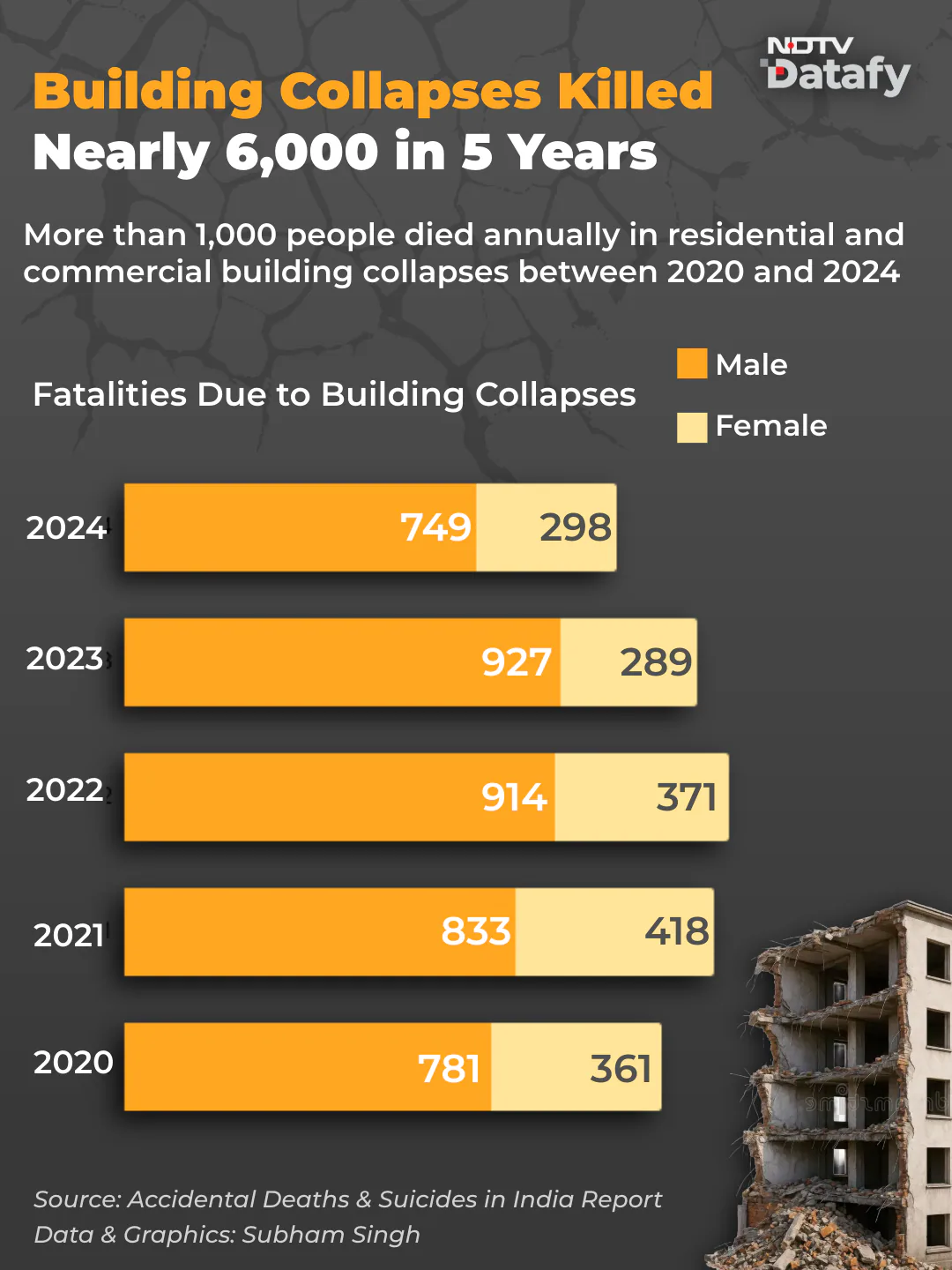
The concern has been further amplified by another structural collapse in Gujarat’s Gandhinagar, where a portion of the under-construction Bosky The Empire commercial complex collapsed on September 9, trapping 15 workers under debris. Data from 2020 to 2024 show that residential buildings account for a majority of building collapse incidents in India. During these five years, more than 900 dwelling houses collapsed every year. In comparison, the number of commercial or office building collapses remained below 100 annually. Between 2020 and 2024, a total of 5,941 people lost their lives in residential and commercial building collapse incidents. Annual fatalities remained above the 1,000-mark throughout the period. Men accounted for nearly 70% of the deaths reported during these five years. Mizoram recorded the highest fatality rate at 44.8 deaths per million population between 2020 and 2024. The state’s numbers were heavily influenced by the devastating 2023 disaster near National Highway-6, where landslides triggered the collapse of several residential structures and caused large-scale loss of life.
The recent collapse cases have renewed focus on ageing buildings, unauthorised construction and poor structural oversight in densely populated urban areas. the broader data suggests that building safety remains a continuing challenge across many parts of India, especially where large numbers of people live in older residential structures While the immediate investigation will determine what caused the Delhi tragedy.
