
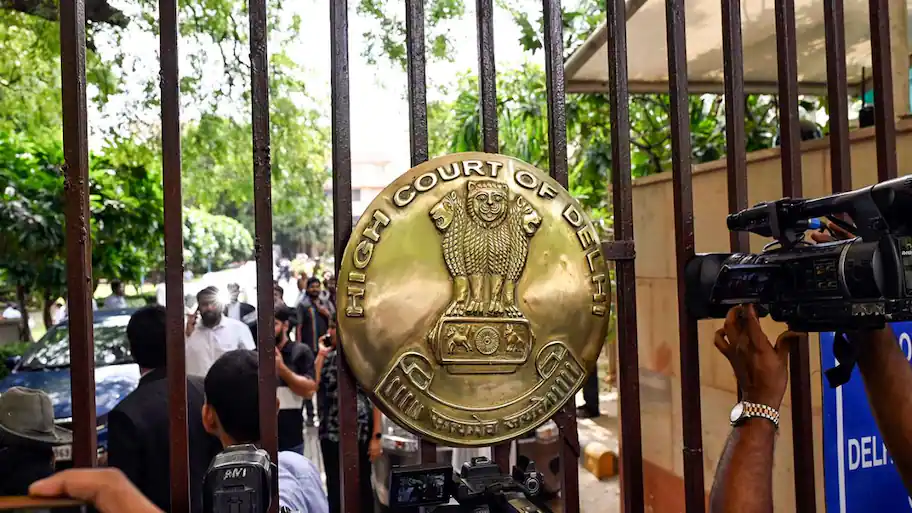
The Delhi High Court has granted bail to Mohd Shahzad Kamal, an accused in a 2018 terror conspiracy case, noting that he has spent more than five years in custody and that the trial involving 161 prosecution witnesses is unlikely to conclude anytime soon.
The court, however, clarified that its observations were only for deciding the bail application and would not affect the trial on merits. A Division Bench of Justice Navin Chawla and Justice Arun Bhardwaj set aside the May 29, 2024 order of the Special NIA Court, which had rejected Kamal’s bail plea.
The NIA has alleged that he was involved in the conspiracy and arranged funds for terrorist activities. They also questioned the prosecution’s claim linking him to certain chats and argued that there was no material establishing that the phone number involved in those conversations belonged to him. The NIA opposed the bail plea, arguing that Kamal had played an active role in the alleged conspiracy and that delay in the trial, by itself, could not be a ground for granting bail in a case under the UAPA. The prosecution also argued that the court should not examine evidence recorded after the Special Court had rejected his bail plea. The Bench observed that, at this stage, there was no positive evidence showing that the alleged incriminating chats had originated from Kamal or were addressed to him. The Bench also examined the statements of material witnesses who had already been examined during the trial.
Kamal has been in custody since August 31, 2021, and is accused in a case relating to alleged activities of Harkat-Ul-Harb-E-Islam, which the prosecution describes as an ISIS-affiliated terrorist group. He has been charged under Section 121 of the IPC and Sections 17, 18, 39 and 40 of the UAPA. Kamal’s lawyers argued that he had already spent about five years in custody and that only the evidence of PW-42 was being recorded out of 161 witnesses cited by the prosecution. The High Court noted that Kamal had remained in custody for more than five years and that only one of the 161 prosecution witnesses was under examination.
The court said the issue would ultimately have to be decided after the prosecution led its complete evidence. Without detailing their evidence so as not to affect the trial, the court said it did not find the case to be one where the accused should continue to remain in custody when the trial was unlikely to conclude soon.
