Delhi is preparing to launch a cruise service on the Yamuna before Chhath, but the river’s water-quality readings remain a cause for deep concern. Data from the Delhi Pollution Control Committee’s monitoring stations shows that the Yamuna continues to struggle with high pollution and bacterial contamination, raising questions about the river’s health even as efforts are made every year to clean it.
One of the key indicators of river health is biochemical oxygen demand (BOD), which measures the amount of oxygen needed to break down organic waste in water. Higher BOD levels generally mean higher pollution. But as the river flows through the Capital, pollution levels rise sharply.
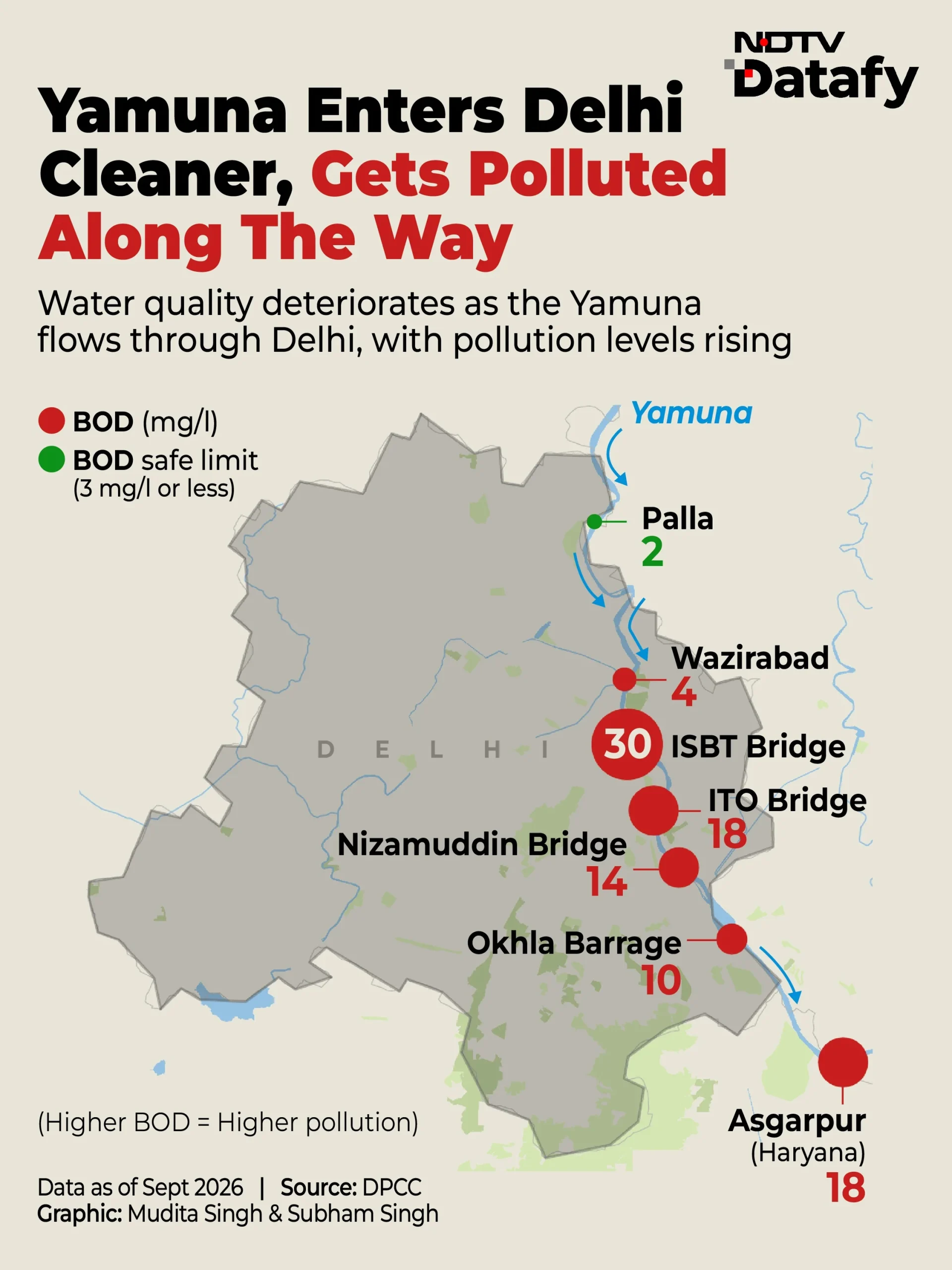
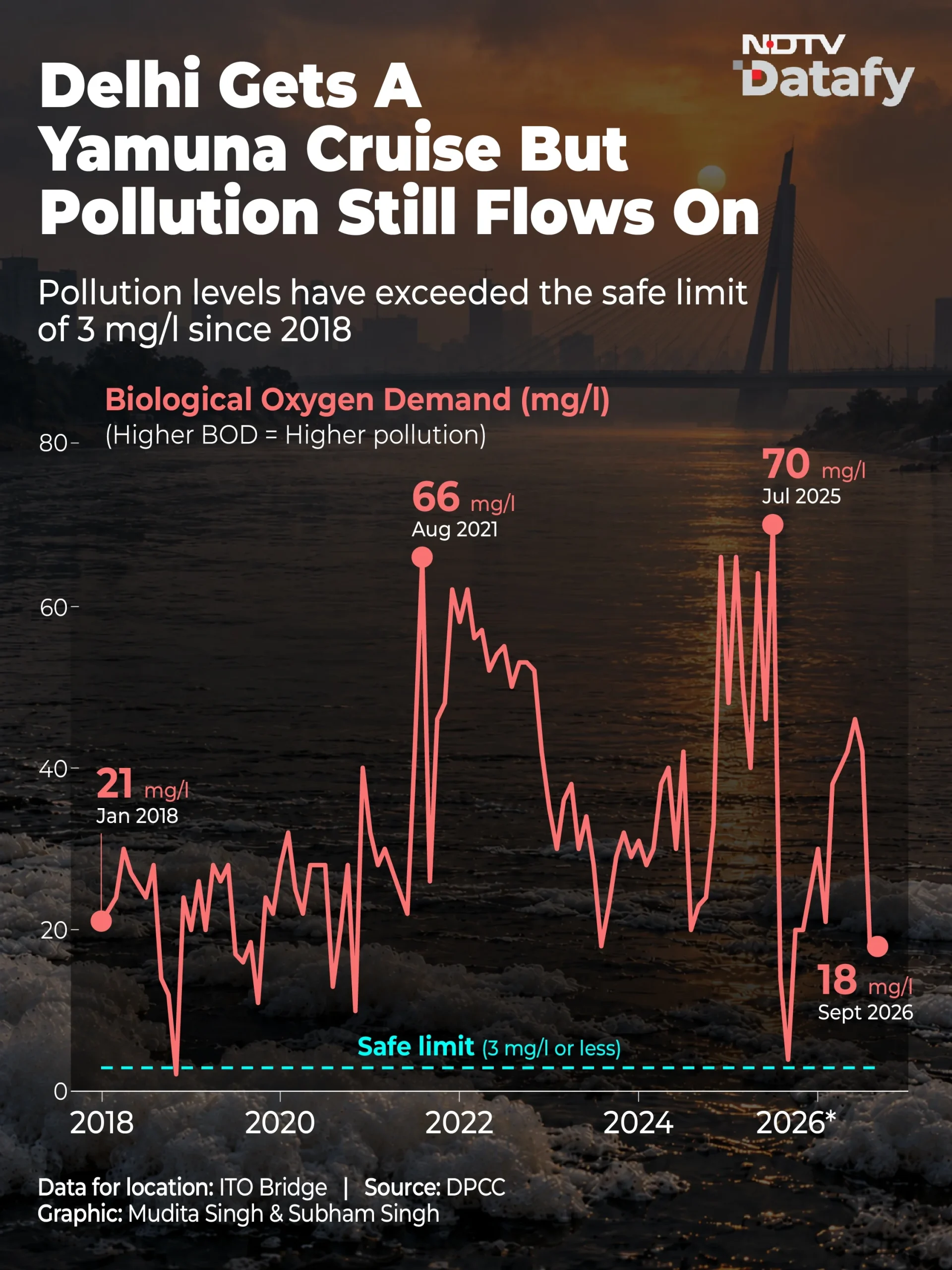
The safe standard for BOD is 3 milligrams per litre (mg/l) or less, but the Yamuna’s readings have consistently remained above this threshold over the past eight years. [FLAG 4] In many months, pollution levels were several times higher than the prescribed limit. Some of the highest readings touched 66 mg/l in 2024 and 2025, while the river recorded a peak of 70 mg/l in July 2025. The trend suggests that despite years of clean-up efforts, the river’s water quality remains far from the desired standard. [FLAG 7] Location-wise data from the Delhi Pollution Control Committee for September 2026 shows the pattern more clearly. At Palla, where the Yamuna enters Delhi, the BOD level stands at 2 mg/l, comfortably within the safe limit.
Yamuna Cruise To Launch Before Chhath, But Data Shows River Still Polluted
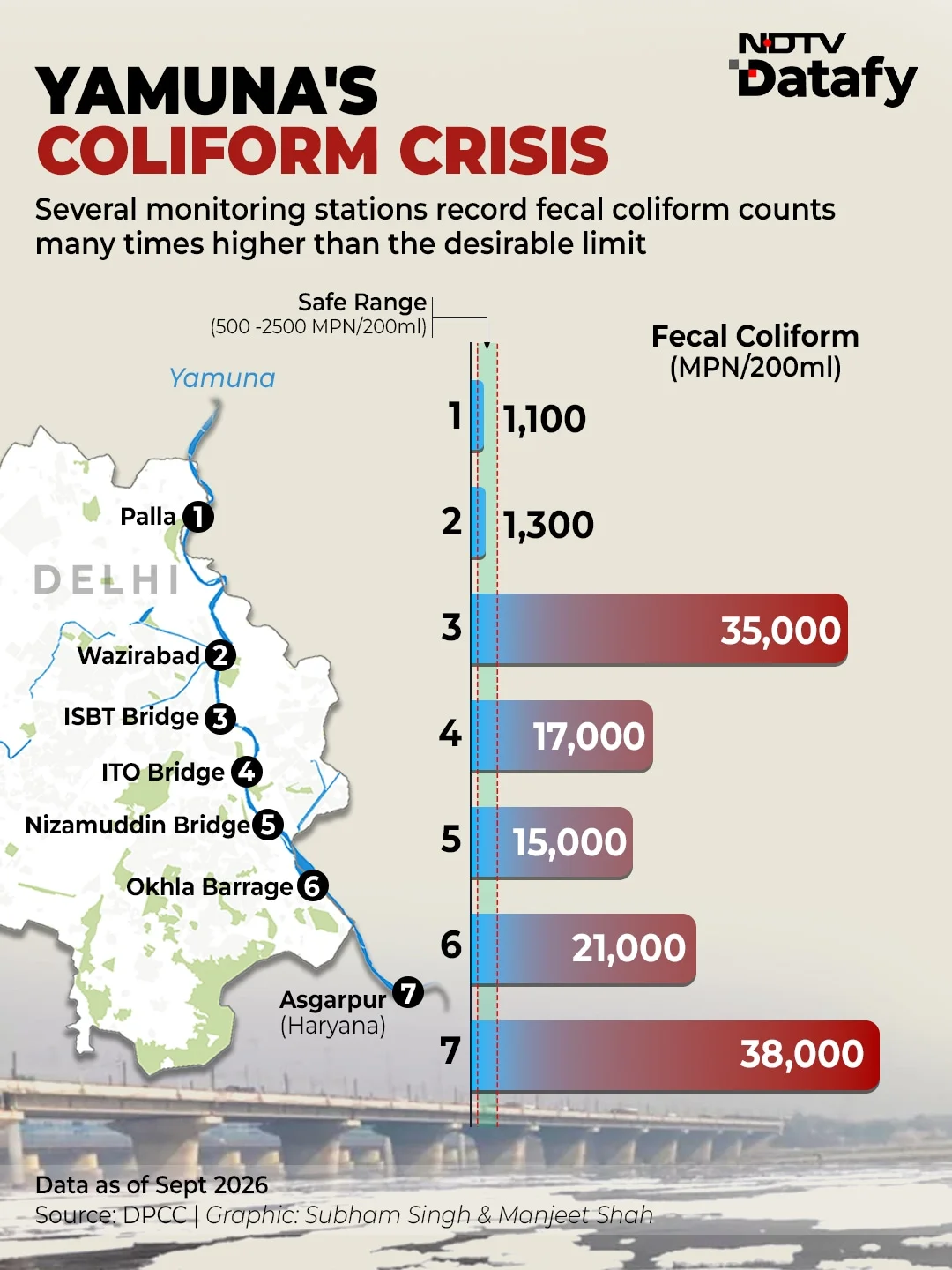
The pattern suggests that a significant share of pollution is added within Delhi itself, turning a relatively cleaner river at the entry point into a far more polluted one by the time it leaves the city. Bacterial Contamination Remains A Serious Concern The pollution story is not limited to BOD alone. Another key water-quality indicator, faecal coliform, measures contamination from human and animal waste. These figures are many times higher than the recommended range and point to persistent bacterial contamination along the river’s course through Delhi. The proposed cruise service aims to offer residents and tourists a new way to experience the Yamuna. But the data indicates that the river still faces long-standing environmental challenges. The contrast is striking: while preparations are underway for boats to sail on the Yamuna before Chhath, pollution indicators remain above safe levels at several stretches of the river.
The BOD level jumps to 30 mg/l at the Inter-State Bus Terminal Bridge, before remaining elevated at downstream locations such as ITO Bridge, Nizamuddin Bridge, Okhla Barrage and Asgarpur. The desirable range is 500 to 2,500 most probable number (MPN) per 100 ml. While Palla and Wazirabad record relatively lower counts of 1,100 and 1,300, levels surge dramatically at other monitoring stations, showing the same pattern: a cleaner river at the entry point that becomes polluted along the way. The count reaches 35,000 at the Inter-State Bus Terminal Bridge, 17,000 at ITO Bridge, 15,000 at Nizamuddin Bridge, 21,000 at Okhla Barrage and 38,000 at Asgarpur.