
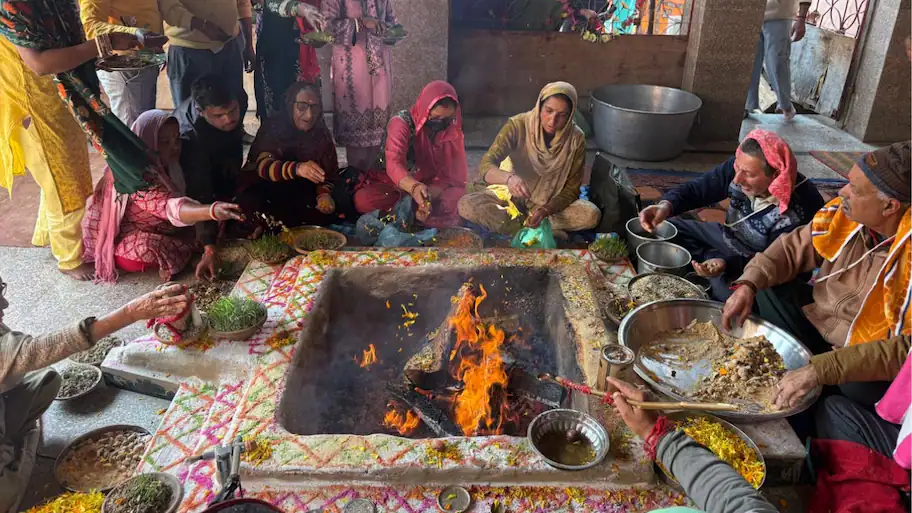
Kashmiri Pandits gathered at the historic Durganaag Temple in Srinagar to celebrate Maha Ashtami and Maha Navami, which coincided this year, offering prayers to Goddess Durga and expressing hope for the return of peace and Hindu-Muslim harmony in the Kashmir Valley.
The occasion was marked by religious rituals, special pujas and the chanting of mantras, as devotees offered flowers, fruits and traditional Kashmiri vegetarian dishes at the temple. The Durganaag Temple in Srinagar, described as the only Asthapana of Mata Durga in the Kashmir Valley, remained the main centre of the celebrations. Special pujas were conducted throughout the day, alongside the recitation of the Durga Saptashati. The temple complex resonated with devotional chants and the sound of conch shells. Devotees also performed Kanya Puja, a ritual in which young girls are worshipped as manifestations of the Goddess. The prayers sought blessings for prosperity, protection and peace. The coincidence of Maha Ashtami and Maha Navami added significance to the celebrations. Maha Navami marks Goddess Durga’s victory over the demon Mahishasura, symbolising the triumph of good over evil. For the community, the festival was also an occasion to pray for stability and a return to the harmony that once characterised life in the Valley. “Many new temples are opening, and things are improving every day. We want this atmosphere to remain. We prayed for the same Hindu-Muslim brotherhood that we once lived with. Elders at the temple recalled the large gatherings that once marked festivals at Durganaag and expressed hope that the same scale of participation and communal warmth would return to the shrine and the wider Valley. The sentiment was shared by other devotees, who spoke of a growing, albeit cautious, sense of optimism. For Kashmiri Pandits, the desire to see the return of pre-1990s harmony remains central to their prayers. Before terrorism intensified in the late 1980s and early 1990s, Kashmir was known for its syncretic culture, often referred to as Kashmiriyat, in which Hindus and Muslims shared traditions, festivals and aspects of everyday life. The mass exodus of Kashmiri Pandits during those years left deep scars on the community. Displacement and years of turmoil disrupted longstanding social and cultural ties.
We wish the same should return,” a devotee said.
The celebrations also brought back memories of the grand festivals held at the shrine before the 1990s, when large numbers of devotees gathered there. The celebrations were accompanied by hopes that Kashmir would regain the atmosphere of communal harmony remembered by many Kashmiri Pandits from before the 1990s.
Today, the gradual restoration and reopening of temples, along with religious gatherings, are seen by many in the community as signs of a slow return towards normalcy. Government efforts in recent years to rebuild trust with Kashmiri Pandits have also contributed to cautious hope. Beyond the religious ceremonies, the celebrations at Durganaag served as a reminder of the community’s efforts to preserve its cultural and religious traditions despite displacement and hardship. The rituals, offerings and collective prayers reflected a determination to keep that heritage alive while hoping for a future marked by peace and mutual respect. As the ceremonies concluded, devotees continued to pray for the blessings of Mata Durga and for the return of an atmosphere in which communities could celebrate festivals together. For Kashmiri Pandits, the coincidence of Maha Ashtami and Maha Navami was not only a religious occasion but also an opportunity to renew their hopes for the restoration of Kashmiriyat and the communal harmony they remember from the past.
