
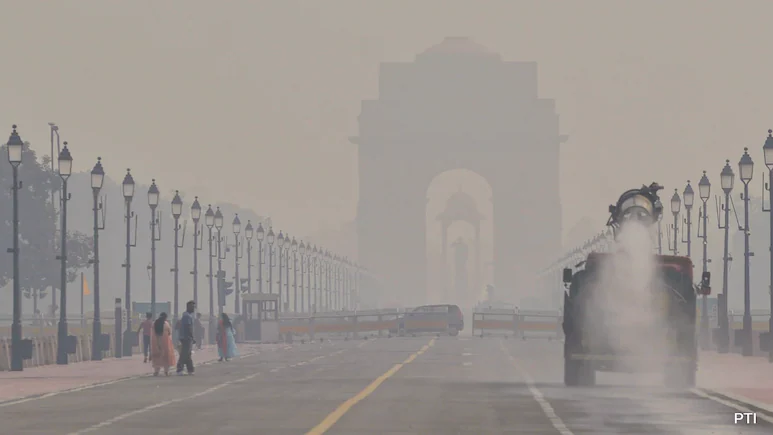
Ahead of Diwali, air quality in Delhi and the National Capital Region has dropped, triggering the Stage-III restrictions of the Graded Response Action Plan (GRAP).
GRAP is a set of emergency measures to curb air pollution in Delhi-NCR, with the restrictions growing stricter as air quality worsens. It has four stages, each linked to a pollution level: GRAP-III restrictions include a complete ban on non-essential construction and demolition work, such as earthwork, piling, trenching and open-air operations of Ready-Mix Concrete (RMC) plants. Diesel generator sets are prohibited except for emergency and essential services. Private companies have been advised to adopt work-from-home or hybrid modes to curb vehicular emissions.
This comes after Stage-II restrictions were imposed in Delhi and the NCR region on November 02, when AQI reached 382. BS-3 petrol and BS-4 diesel four-wheelers are barred from running on roads in Delhi and neighbouring NCR districts, and inter-state diesel buses are restricted from entering or operating in the capital. Schools up to Class 5 are to remain closed, with classes shifted online to protect young children from toxic air.
READ | “I Have Been A Good Parent”: Viral Tweet Comparing Delhi’s AQI With Helsinki’s Strikes A Chord The Commission for Air Quality Management (CAQM) has applied the Stage-III restrictions across the entire NCR with immediate effect as a precautionary measure, after Delhi’s average Air Quality Index (AQI) hit 382 on Thursday, placing it in the “very poor” category. READ | “Hope You’re Enjoying Weather”: Supreme Court’s Quip On Delhi Pollution The restrictions also include a ban on transporting construction materials such as sand and cement, especially on unpaved roads, and the closure of stone crushers, mining operations, and hot-mix plants that do not run on clean fuel.
