
By- Adv. Nivedita Singh
No person, and no office, could sit above the Constitution. To the young advocates he added a harder line: when injustice is before you, silence is not an option. History will deliver the verdict; the argument is yours to make. The Emergency, he argued, taught the difference between the rule of law and the rule of a ruler. Citing Justice H.R. Young advocates, on this reading, are not merely licensed to practise. They are charged with the defence of constitutional values. That charge was given a classical form. Invoking Dr Lohia, he added that a jurist should have the mind of Shiva, the heart of Krishna and the word of Ram. The image is exacting. It asks for intellect without coldness, feeling without softness of principle, and speech that does not wander from either. The same standard was applied to a larger brief. The implication is plain: the lawyer is not a spectator of the state’s economic ambition. The quality of the law, and of those who argue it, is part of the condition for growth. On technology the caution was sharper. A careless draft can cost an innocent person liberty. Deepfakes and cyber-crime have already put the credibility of evidence under strain. The tools are being built. The warning is that the tool must not become the driver. Students were urged to stand against injustice, stay rooted, and keep studying. They were asked to help settle land and family disputes in the villages. If pressure came to do the wrong thing, principle was not to be traded. The advice is ordinary in a speech and exacting in practice. The real examination of education begins outside the university. He called for constitutional values, compassion and sensitivity to be lived, not only recited. Allahabad High Court Chief Justice Arun Bhansali noted the university’s particular place in legal education and its contribution to the judiciary, to teaching and to public service. He expressed the confidence that students would carry high standards and tradition forward and strengthen the rule of law. The medals were awarded in the usual order. In the LLM, Rupali Jaiswal took gold, Chitra Singh silver and Saumya Giri bronze. In the LLB Honours, Tejaswini Kaushal took gold, Isha Agrawal silver and Nisha Verma bronze. Isha Agrawal also received three sponsored gold medals – the Justice O.P. Pradhan Memorial in criminal law, the Padmawati Mohanlal Jariwala in constitutional law, and the Virendra Bhatia for Student of the Year. A convocation speech is easy to file under ceremony. This one is harder to file. It ties the state’s claim of a shift from the rule of mafia to the rule of law to a direct instruction to the next generation of advocates: do not stay silent, do not outsource judgment to a machine, and do not treat credibility as secondary to success. Whether that instruction is remembered will depend less on the hall in which it was spoken than on the chambers in which it is, or is not, kept. (Nivedita Singh is a practising advocate at the Allahabad High Court and is actively engaged in work on women’s rights. She writes on contemporary issues and current affairs. The opinions expressed above are the personal views of the author and do not reflect the views of Zee Media)
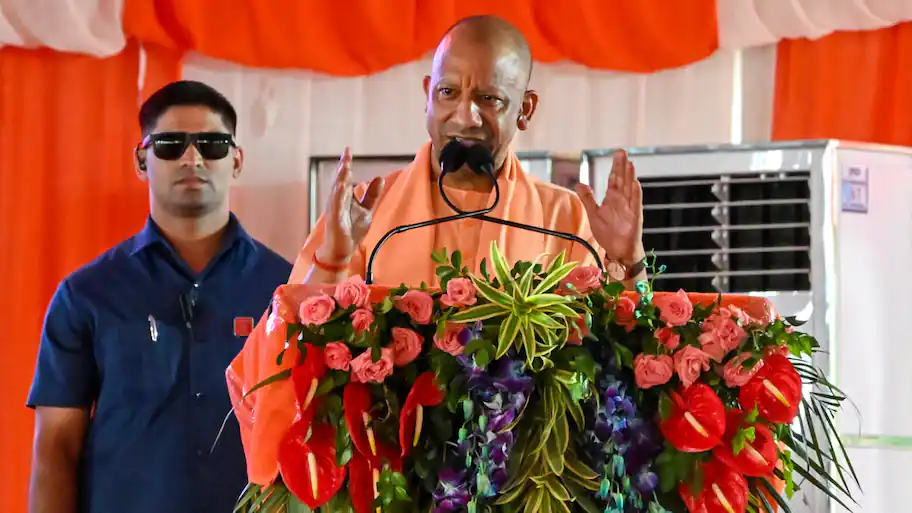
On 17 October, at the fifth convocation of Dr Ram Manohar Lohia National Law University in Lucknow, Chief Minister Yogi Adityanath did not offer the usual ceremonial comfort. Before 2017, he said, law and order and investment were both objects of doubt; the mafia had stood in the way of development. The Chief Minister placed 25 June 1975 beside 15 August 1947 and 26 January 1950 as a date that still matters to Indian democracy. The Chief Minister presented the idea of a developed India as a case to be argued – for 140 crore citizens, with facts, evidence and honesty. By 2047, he said, young advocates would have a part in that resolve. Closer at hand, the state has a plan to become a one-trillion-dollar economy by 2029–30.
He told the graduating class that Uttar Pradesh had been freed from the “rule of mafia” and placed under the “rule of law. Khanna’s dissent, he said that a decision taken on the side of principle earns its place in history. “Satyam Vada, Dharmam Chara, Swadhyayan Ma Pramadah” – speak the truth, follow dharma, do not neglect study – was not to be framed on the chamber wall but taken into the heart. Truth and continuous study, he said, are the ground of an advocate’s life. Artificial intelligence, the Chief Minister said, can make work easier, but the final decision must remain with human judgment. The state has cyber police stations in all 75 districts and cyber help desks in 1,583 police stations; under “AI Pragya,” ten lakh young people are being trained. An advocate’s greatest capital, he said, is credibility. Supreme Court Justice Vikram Nath told the graduates that a degree is not a destination but the start of a new journey. Success, he said, would be measured by how much positive change a student brings to other people’s lives.
