
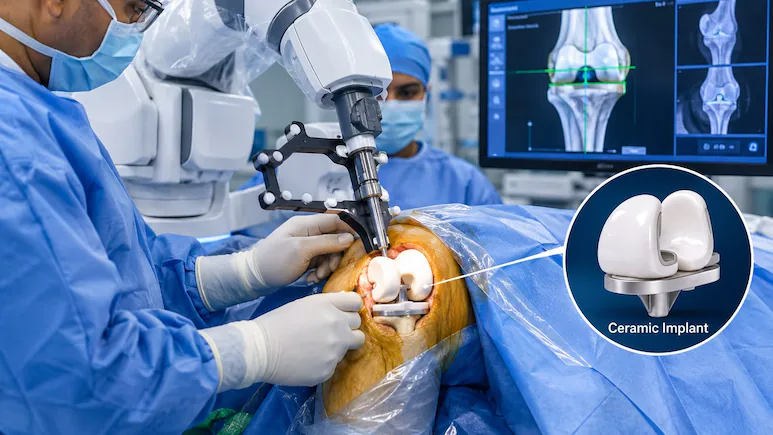
In a first-of-its-kind procedure, doctors in Delhi have combined an active robotic surgical system with a non-metallic, ceramic knee implant, a development they said could mark a new direction in knee replacement surgery.
The procedure was performed using active robotic assistance and was described by the doctors as the world’s first active robot-assisted surgery involving a non-metallic/ceramic knee replacement, according to a statement issued on Wednesday. Dr Sujoy Bhattacharjee, Chairman and Chief of the Max Institute of Robotic Joint Replacement at Max Super Speciality Hospital, Saket, and German orthopaedic surgeon Prof Dr Michael Wagner discussed the procedure at a press conference here. Unlike conventional knee replacements, which predominantly use metal components, the procedure uses a ceramic/non-metallic implant. The doctors discussed how the material differs from conventional implants and the potential advantages and limitations associated with its use. The doctors also discussed recent advances in robotic joint replacement, minimally invasive techniques and the future use of advanced implant materials in knee surgery.
The doctors said the approach brings together advances in implant material and robotic surgery, with the active robotic system assisting in achieving greater precision during the procedure. “The integration of active robotic technology with non-metallic implants opens a new avenue in knee replacement surgery,” Bhattacharjee said in the statement. The other part of the development is the use of an active robotic system, which is designed to assist in the execution of surgical steps and achieve sub-millimetre accuracy, according to the statement. Bhattacharjee said the technology could help improve consistency in procedures by enabling greater precision in bone preparation and implant positioning. Doctors said developments in implant materials needed to be accompanied by advances in surgical precision. “Precision in implant positioning is an important part of achieving a successful joint replacement,” the statement read. The doctors further said the convergence of active robotics and non-metallic implants could shape the development of the next generation of joint replacement procedures. (Except for the headline, this story has not been edited by NDTV staff and is published from a syndicated feed.)
