
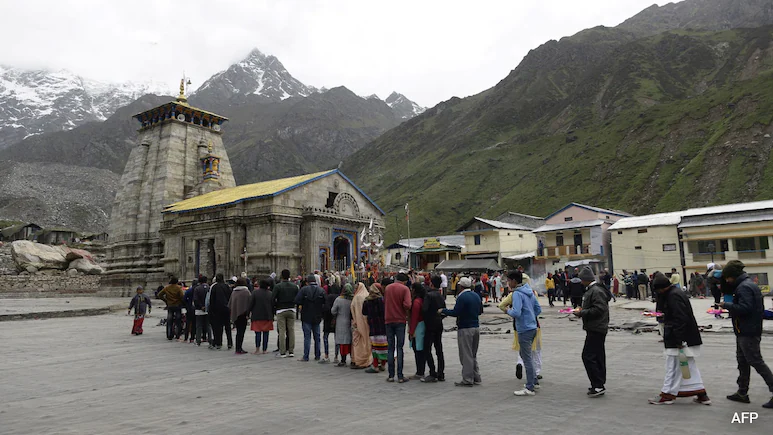
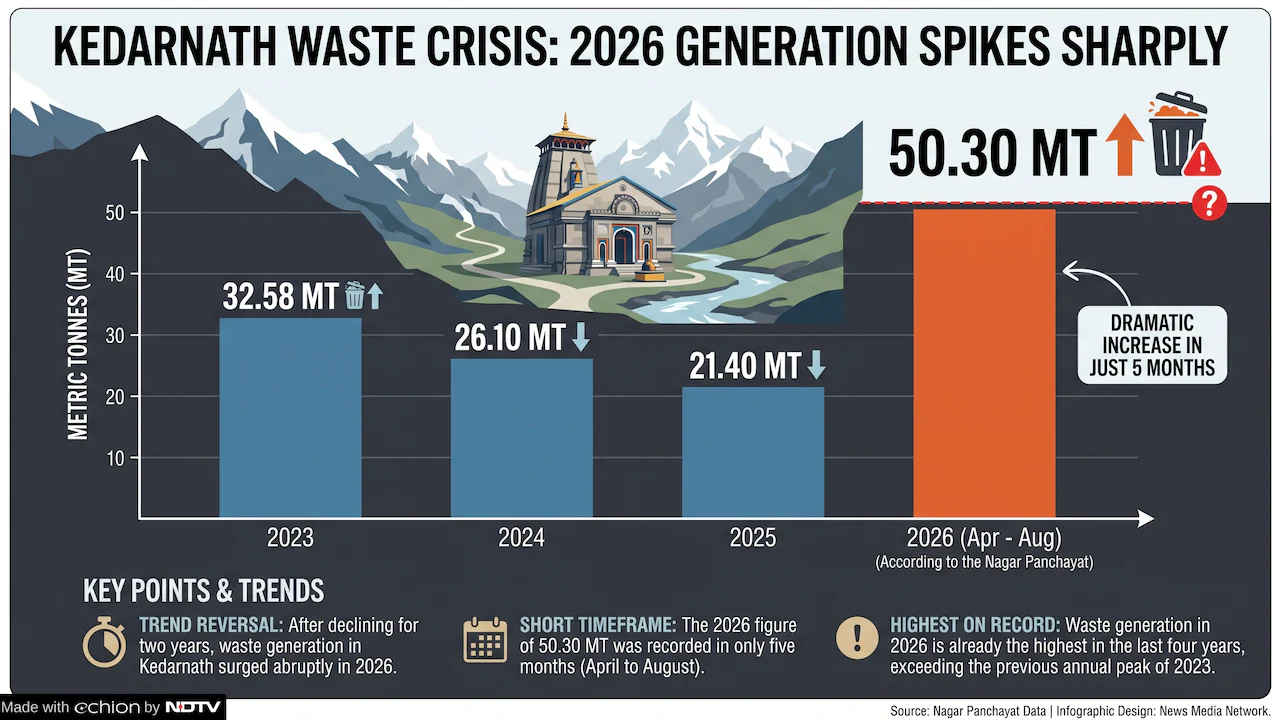
Kedarnath, one of India’s most visited Himalayan pilgrimage sites, has recorded a sharp rise in waste generation this year as pilgrim numbers continue to climb. The shrine generated 50.30 metric tonnes of waste between April and August 2026, according to data provided by the Kedarnath Nagar Panchayat under the Right to Information (RTI) Act. The five-month figure is already more than twice the waste recorded during the entire pilgrimage season in 2025 and is higher than the total recorded in each of the previous three years.
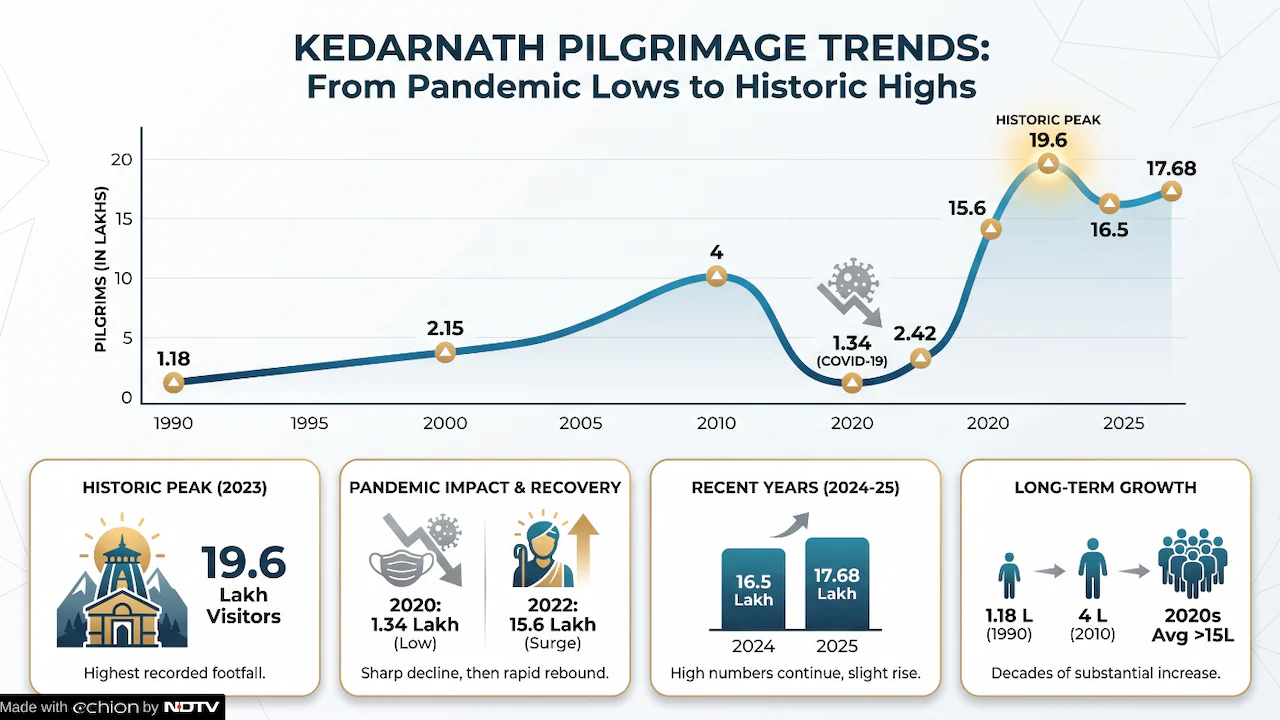
Environmentalists like Chandan Nayal have raised concerns over the impact of plastic waste in the Himalayan region. Kedarnath recorded 16.52 lakh visitors in 2024 and 17.68 lakh in 2025. More than 15 lakh pilgrims have already visited the shrine in 2026, according to the district administration. The 2026 pilgrimage began on April 22, and the temple doors are scheduled to close for the winter season on November 11. The administration has imposed a daily cap of around 13,000-15,000 registered pilgrims to manage the narrow 16-km trekking route between Gaurikund and Kedarnath.
The most unfortunate aspect of plastic waste in the area is its potential role in accelerating snow melt that can further destabilise the environment, according to Nayal.
In 2025, a team of researchers from the institutes including the GB Pant National Institute of Himalayan Environment in Uttarakhand found that the area under snow cover in the four Himalayan shrines and around them has declined significantly in about two decades. It said that snow cover retreat was the highest in Gangotri glacier (22.36 m per year) followed by Yamunotri (20 m per year), Badrinath (17.32 m per year) and Kedarnath (14.14 m per year) between 2002 and 2020.
