

Businesses are investing heavily to make the most of the artificial intelligence boom, particularly agentic AI, a network of autonomous AI agents that can plan, make decisions and execute complex tasks with minimal human oversight.
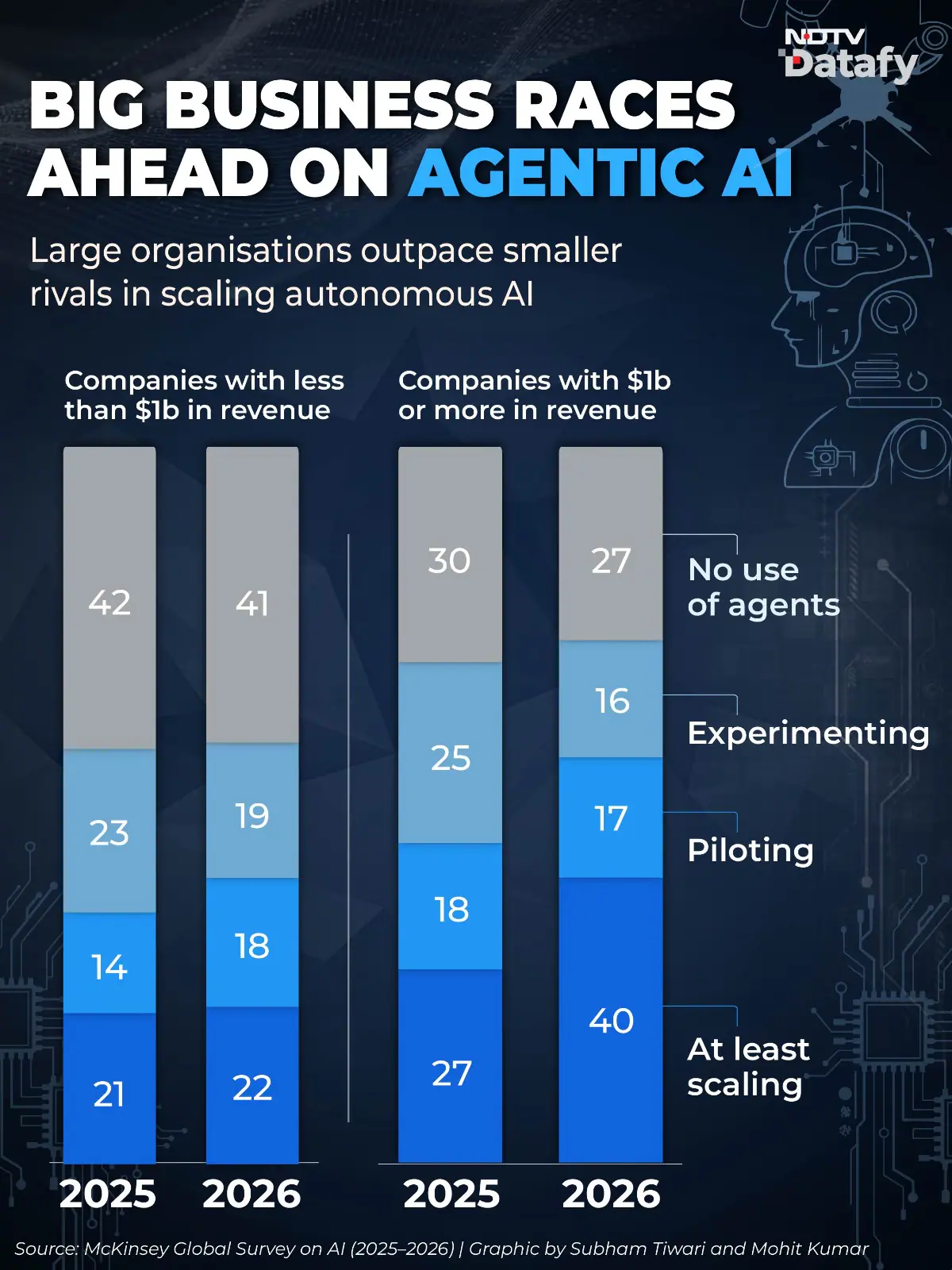
The goal is to take automation to the next level by introducing digital co-workers that complete tasks in much less time and at a lower cost than humans. Sentiment is upbeat. Indian companies are also riding the agentic AI wave. Big Firms Take Lead Large companies are embracing agentic AI at a much faster pace and scale than their smaller peers. Big companies are also scaling agentic AI at a much faster pace. But small companies registered growth in the scaling of just one percentage point.
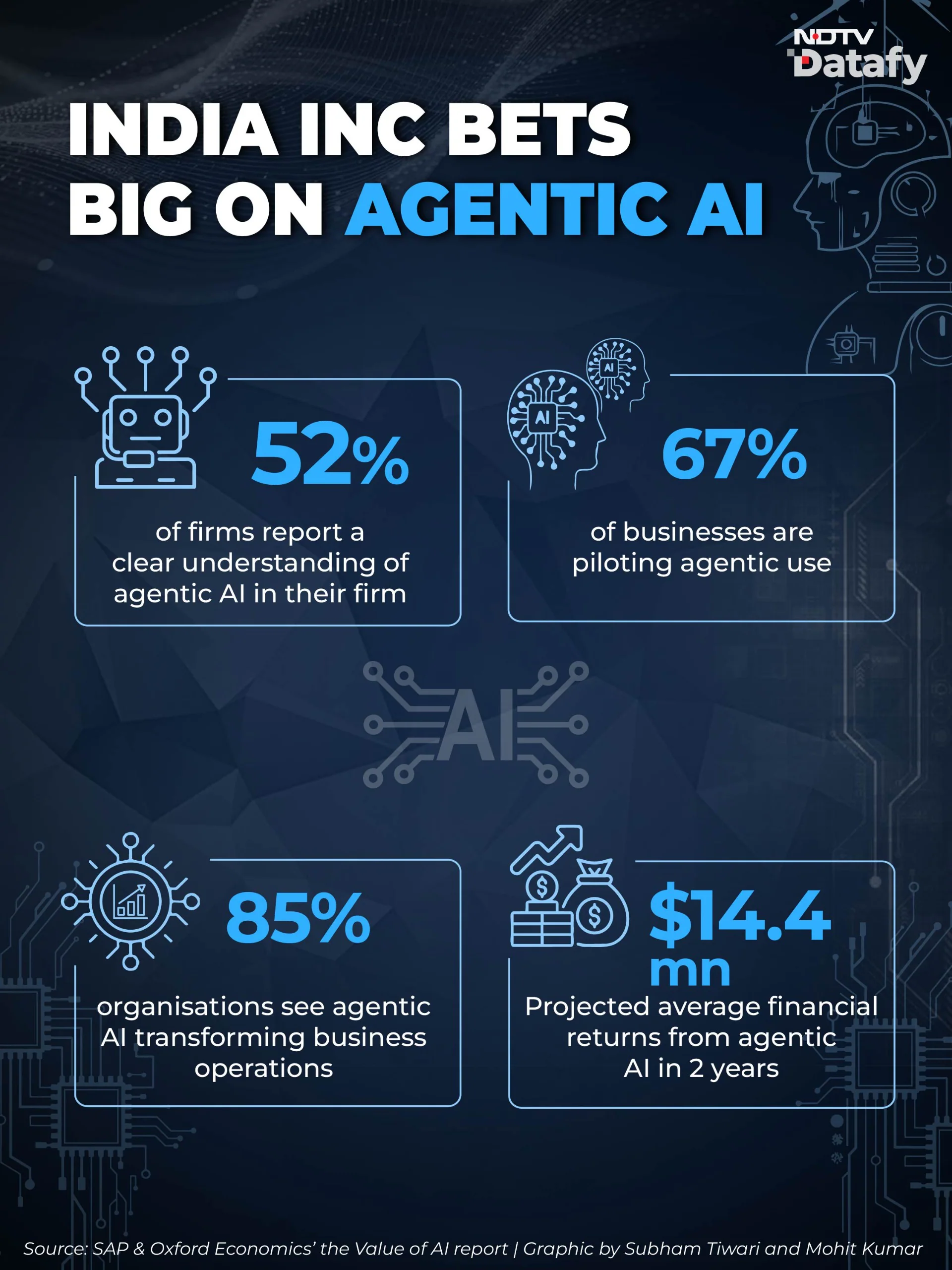
More than nine in 10 (93 per cent) business leaders believe that organisations that scale AI agents within a year will gain a critical edge over their competitors, as per a Capgemini report. Nearly 45 per cent of companies have already scaled AI agents, or integrated them into their broader workflows, while nearly 34 per cent are testing their deployment, according to a McKinsey survey published in August 2026. Nearly nine in 10 business leaders expect agentic AI to transform their operations. More than 65 per cent of companies are testing its use, as per SAP and Oxford Economics’ Value of AI report 2026. McKinsey surveys found that at least four in 10 organisations with $1 billion or more in annual revenue have already deployed agentic AI. In smaller companies, the rate of scaling is just 22 per cent. Among big companies, the rate of agentic AI scaling was 27 per cent in 2025 and grew by 13 percentage points within a year.
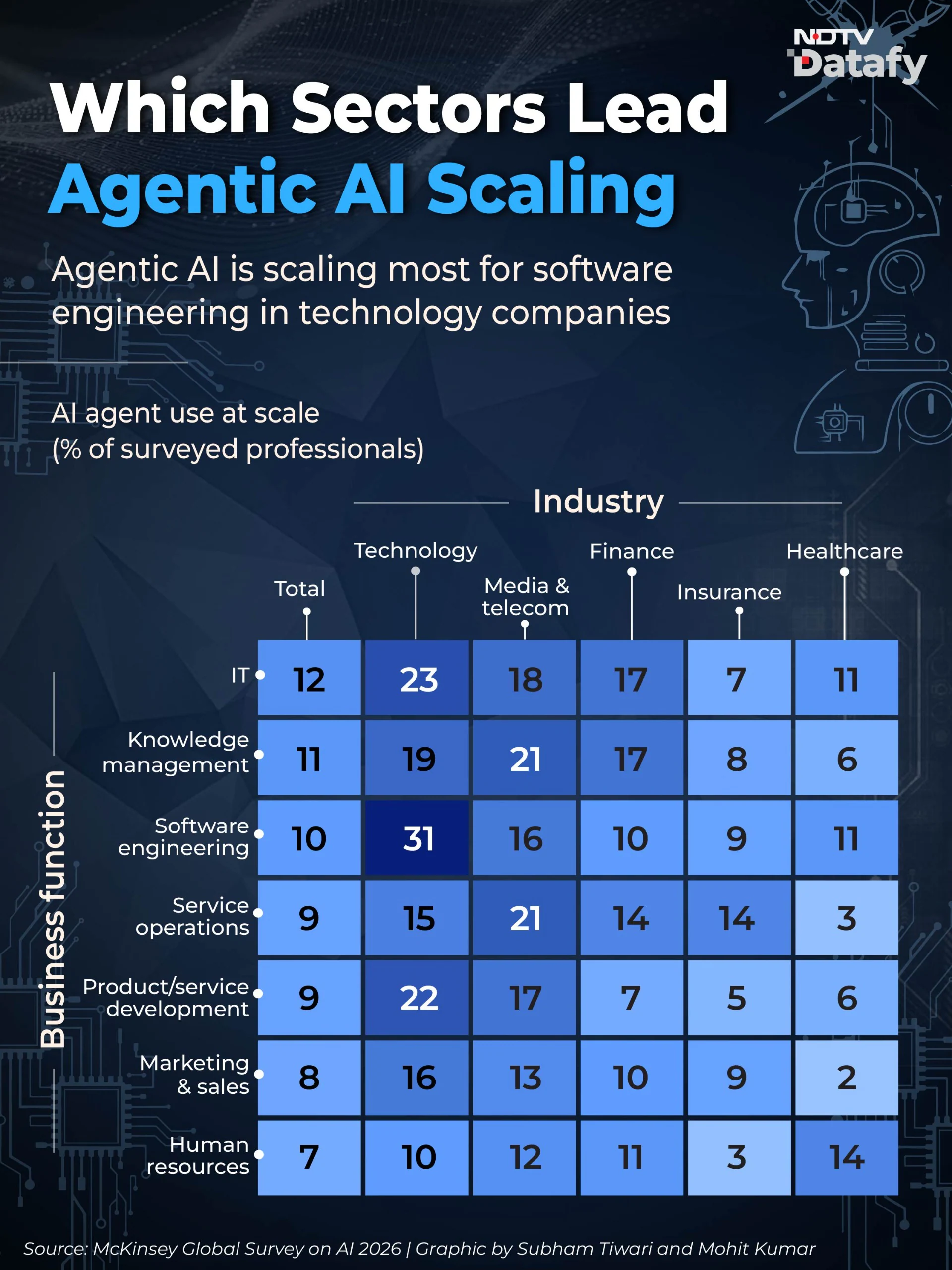
Adoption is uneven across industries. Agentic AI is broadly being used in business functions such as information technology, knowledge management, services, product and service development, and marketing and sales. Bottlenecks Persist Notwithstanding the high ambitions, readiness and concerns about return on investment remain key challenges. In the case of India, there is an additional challenge of lower levels of expertise than in other countries. Among Indian companies, concerns about agentic AI governance, the risks it poses, challenges in identifying real use cases, issues around technology and data availability, and costs are among the major barriers to adoption.
As per the McKinsey survey, 31 per cent of technology professionals said that agentic AI was being used at scale for software development, the highest share. The corresponding figure is 2.6 per cent globally.
In a Deloitte survey of 200 Indian professionals, no respondent reported a “very high” level of agentic AI expertise.
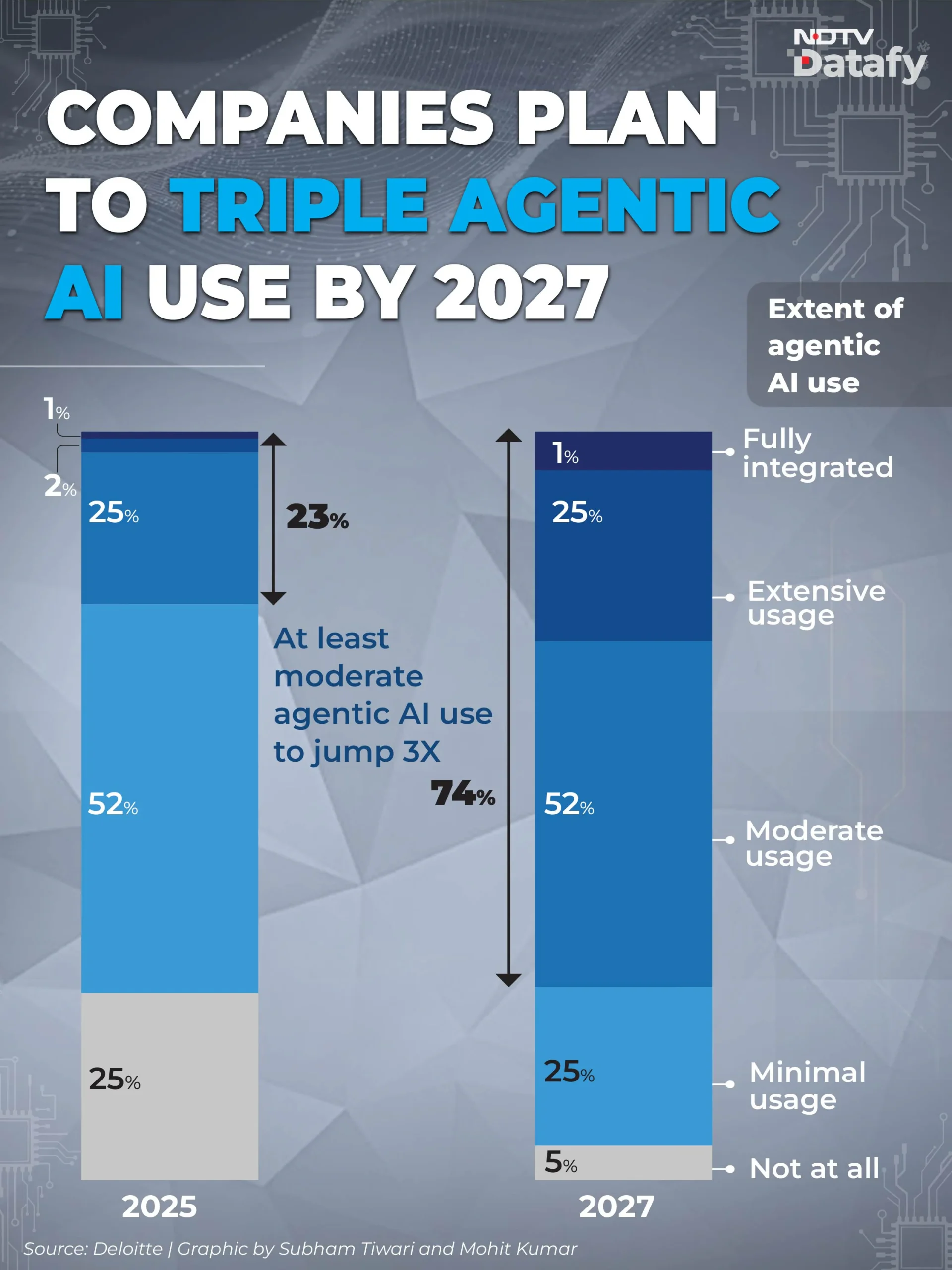
The most debated issue is return on investment. Industry leaders and experts have not yet agreed on how to clearly measure how much they are getting back from integrating AI agents into their workflows. Nevertheless, expectations remain upbeat.
only 37 per cent of professionals believe AI has contributed to their organisations’ earnings While there is agreement that adoption has significantly cut the time needed for tasks and improved efficiency. Indian companies expect an average of $14.4 million in financial returns from their investments in agentic AI over the next two years.
