
By Deepmala
Today, this recognition is being voiced in Uttar Pradesh and is reflected in the figures. The daughter of the state who once could not even reach the threshold of a school for fear for her safety is today making her place in the police force, in startups, and on the sports field. A profound question is how we should view women. Should it be only from the perspective of respect? I believe that, alongside respect, viewing women as a force of creation also benefits the state’s development. After all, the real assessment of any society’s progress is based on how actively half its population participates in the development process. When women move beyond the threshold of their homes and establish their identity through their labour and capabilities in farms and fields, factories, offices, markets, startups, self-help groups and the world of entrepreneurship, the change does not come only in the lives of those women but also changes the direction of the entire economy. The increase in women’s labour force participation over the past nine and a half years under the Yogi Government in Uttar Pradesh is a major testament to this. The figures related to Nari Shakti in Uttar Pradesh are not merely an increase in employment figures. Behind them is the expansion of social consciousness, in which women are becoming partners in their families’ economic responsibilities, emerging as an active force in development, and stepping forward to make decisions for themselves and their families. Chief Minister Yogi Adityanath has set a vision for the state of development with Nari Shakti as its foundation. From self-help groups to banking and digital services, from farms to small industries, and from traditional occupations to modern entrepreneurship, their presence has become widespread. This transformation shows that when opportunities, security, skills and institutional support come together, women’s talent gives momentum not only to families but also to the state’s economy. In Indian thought, women are certainly revered, but this becomes meaningful only when it finds expression in policy, is reflected in the budget, becomes visible in deployment at police stations, and is seen in the confidence of a daughter walking through a village lane. In a vast state like Uttar Pradesh, where traditions are deeply entrenched, this question is profoundly political as well as economic. The Working Women’s Felicitation Ceremony held recently in the Pindra assembly constituency of Varanasi was a glimpse of this very thought. These women’s labour had long nurtured the foundations of society, yet they remained deprived of recognition until a decade ago. Even so, we cannot say the journey is complete. That would be self-congratulatory, but one thing is certainly clear: the direction is now clear. This is the story of a trust that was woven gradually, policy by policy. (The views expressed in this article are those of the author and do not necessarily reflect the official policy, editorial stance, or position of Zee News, its management, or its parent company.)
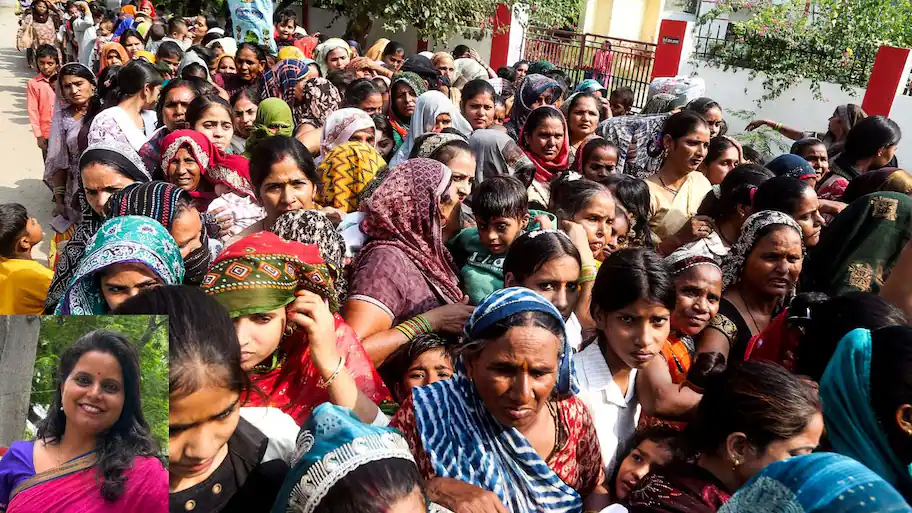
More than 10 thousand women, Anganwadi workers, cooks, Safai Mitras and ASHA workers were all present on one platform.
