
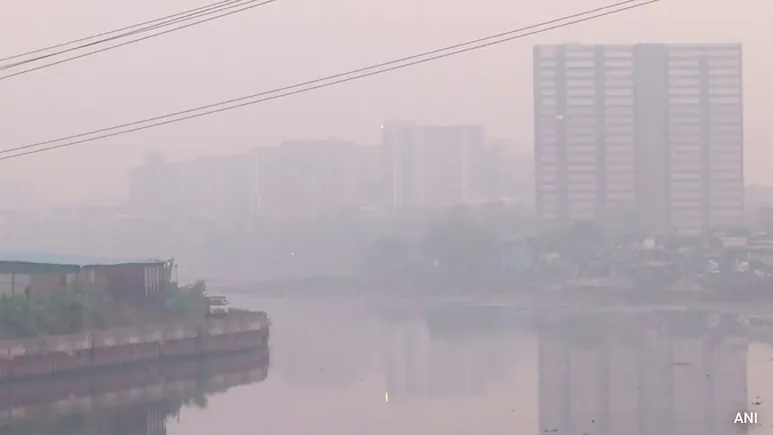
Mumbai’s worsening air quality has exposed a wider urban pollution problem, with road dust, vehicle emissions, industrial activity and construction sites all contributing. As authorities announce fresh measures, questions remain over monitoring, enforcement and the sources responsible for the city’s polluted air.


The contrast was striking, but a single day’s readings do not establish which city has worse air over the long term. Mumbai’s latest spell of pollution instead highlights the combined impact of emissions, weather conditions and gaps in pollution control. A preliminary study also highlights the substantial contribution of road dust to Mumbai’s particulate pollution. both point to the need to address road dust alongside construction emissions While the estimates and methods differ across studies. Mumbai’s coastal location does not prevent pollution from accumulating when winds are weak. Weather conditions can reduce the dispersion of emissions, while humidity and airborne sea-salt particles can contribute to visible haze. Pollution can also come from outside municipal limits. Open garbage burning and agricultural fires may add to the burden when winds carry smoke towards the city. Their contribution varies with location and weather, and should not be assumed to be the principal cause of every pollution spike.
On October 24, Mumbai’s Air Quality Index (AQI) reportedly touched 322, placing it in the very poor category, while Delhi recorded 176 , according to a report published the following day. A scientific study published in the journal Urban Climate in 2024 identified transport, windblown road dust and industrial activity as major contributors to Mumbai’s PM10 emissions, estimating their respective shares at 19.6 per cent, 19.4 per cent and 18.9 per cent. The study used an emissions inventory based on activity data for 2020, making these estimates a useful source-level assessment rather than a measurement of pollution on any particular day.
The real test will be whether these measures produce sustained improvements in particulate pollution across neighbourhoods, rather than temporary relief during favourable weather. For a city that depends on its roads, infrastructure and coastal environment, cleaner air will require coordinated action and measurable accountability.
