
New Delhi’s BRICS strategy is based on the idea that no single power should dictate the world order. That applies as much to the United States as it does to China.
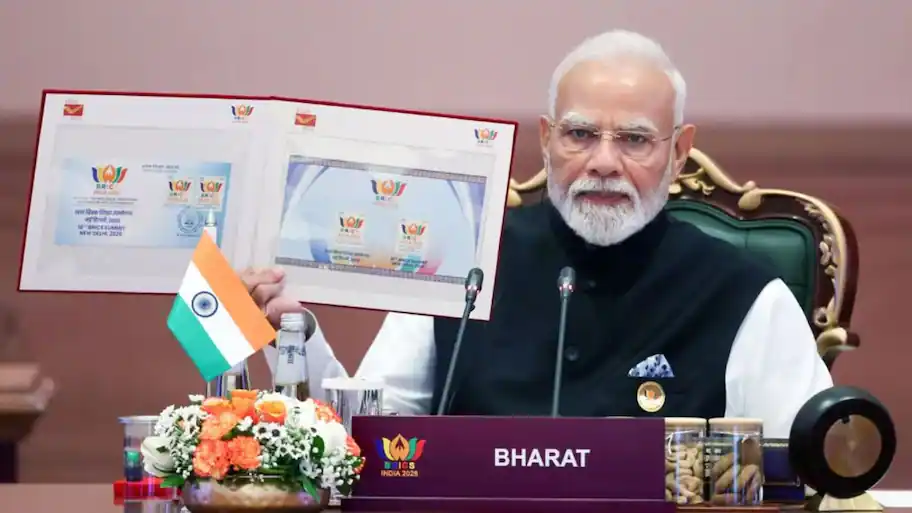
New Delhi has long argued that post-World War II institutions no longer represent today’s economic realities. India cannot afford an anti-Western stance While Russia and China maintain longstanding rivalries with Washington and Iran is at war with the United States. New Delhi maintains strong economic, defense and strategic ties with Western nations along with its bilateral partnerships with BRICS members. Consequently, it views BRICS not as an anti-American bloc, but as an instrument to foster a genuinely multipolar world order that gives developing nations greater representation. This approach was front and center at the 18th BRICS Summit in New Delhi. The resulting joint declaration explicitly advocated for a more representative international system through multipolarity, backing long-overdue reforms to the United Nations Security Council (UNSC) to amplify the Global South. China and Russia, permanent members of the Security Council, reiterated support for India and Brazil playing greater roles within the UN system. Managing Beijing’s outsized footprint in BRICS creates another delicate calculation. As the grouping’s largest economy, China holds its own vision for the bloc. At the New Delhi summit, President Xi Jinping pushed for stronger cooperation in artificial intelligence (AI), finance, trade and technology ahead of China assuming the upcoming BRICS chairmanship. India’s position is clear. Replacing Western hegemony with Chinese dominance in BRICS would defeat the purpose of multipolarity. Bilaterally, both compete for strategic influence across Asia and have serious border disputes. However, New Delhi sees distinct value in keeping Beijing engaged within a multilateral forum to manage disputes. On the sidelines of the summit, Prime Minister Modi and President Xi discussed bilateral trade, market access and border security. The larger BRICS grouping, comprising major economies like India and Brazil, energy giants such as Russia, Iran and the United Arab Emirates (UAE) and emerging nations across Africa and Southeast Asia, brings competing geopolitical interests under one roof. the UAE maintains strong security ties with Washington and India manages strategic partnerships with both Washington and Moscow While Iran is at war with the United States. New Delhi uses this diversity to keep BRICS as an issue-based negotiating platform rather than a rigid geopolitical camp. The New Delhi Declaration reflected this broad scope, covering international trade, sanctions, Middle East stability, counter-terrorism, AI, climate change and supply chain resilience. India’s approach to BRICS is ultimately a push for reform rather than revolution. New Delhi does not seek to dismantle the existing international order or create an anti-Western coalition. It aims to reform institutions and give emerging economies real influence.
Reforming these institutions is therefore a priority.
the latter emphasised that ties must be anchored in “mutual respect, mutual sensitivity and mutual interest” While the former characterised relations as requiring a long-term strategic view. As PM Modi said during the summit, calling for concrete initiatives such as a joint early-warning system for infectious diseases, India wants BRICS to deliver pragmatic cooperation across trade, public health, energy and technology while preserving every member state’s autonomy to pursue its own national interest.
