
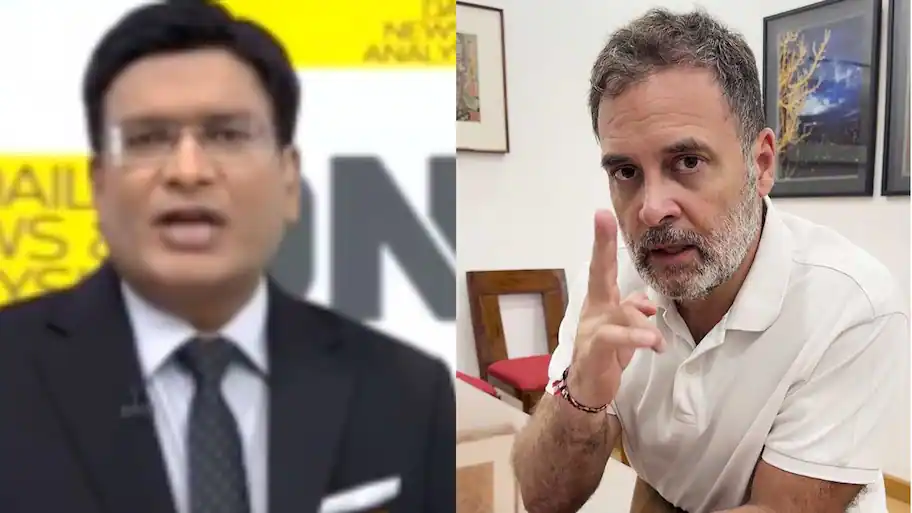
The Supreme Court became the epicenter of a major constitutional debate on Thursday as Chief Justice Surya Kant and Justice Joymalya Bagchi issued a stern reprimand regarding attempts to intimidate or pressure the judiciary. notice was formally issued to Leader of Opposition Rahul Gandhi, Samajwadi Party chief Akhilesh Yadav, Congress President Mallikarjun Kharge, and other opposition figures over the high-drama march to the Supreme Court While the bench avoided naming individual leaders in its verbal remarks. The court was hearing a batch of 46 petitions challenging the Election Commission’s Special Intensive Revision (SIR) of voter lists and related public protests.
The Chief Justice’s sharp observations, declaring that “nobody can browbeat the judiciary” and questioning the conduct of key political actors, have sent strong ripples across the political landscape.
Political Fallout: Ruling Party Seizes the Advantage
The hearing marked an unprecedented standoff between the executive, judiciary, and opposition leadership. Senior advocates Kapil Sibal, Abhishek Manu Singhvi, and Indira Jaising presented arguments on behalf of opposition leaders and civic protesters, while Solicitor General Tushar Mehta represented the Centre and Delhi Police. During proceedings, Senior Advocate Gaurav Bhatia highlighted the disorder caused when marchers and media crowds thronged the Supreme Court corridors and registry office. Seeking court intervention to bar political demonstrations within judicial precincts, Bhatia pressed for criminal contempt notices against key protest leaders. * Notice to Election Commission: The bench issued formal notices to the Election Commission of India (ECI), Chief Election Commissioner Gyanesh Kumar, and fellow commissioners, seeking their detailed response to voter list deletion allegations under the SIR process. * Review of Action at Jantar Mantar: The court issued a notice to the Centre and Delhi Police regarding the decision to denotify Jantar Mantar as a protest site and ordered the preservation of CCTV footage from protest locations. * Protection of Rights: The court agreed to examine petitions regarding police action, detentions, and curb on services like metro trains and internet during the agitation. The Supreme Court’s observations provided immediate political ammunition to the ruling Bharatiya Janata Party (BJP). Party spokespersons accused Rahul Gandhi and the INDIA bloc of attempting to destabilize institutions and bring street politics to the doorsteps of the judiciary. In response, the Congress and allied parties maintained that their fight was strictly aimed at safeguarding voter rights against systemic manipulation and that their respect for the judicial system remains absolute. As Dr. B.R. Ambedkar famously emphasized, the independence and dignity of the judiciary serve as the ultimate shield for a democratic republic. Thursday’s proceedings served as a reminder that while political dissent is a guaranteed constitutional right, maintaining the sanctity of the courts remains non-negotiable.
Responding to the submissions, Chief Justice Surya Kant delivered a clear warning regarding judicial independence: The apex court’s indignation stems from the events of the Opposition’s march towards the Supreme Court. Protesting the Election Commission’s voter roll revisions (SIR) and demanding the resignation of Chief Election Commissioner Gyanesh Kumar, opposition leaders accompanied by large crowds of supporters reached the court premises near closing hours. The sudden influx of political figures, security details, and chanting crowds into the registry office created chaotic scenes. The sight of political sloganeering inside the administrative heart of the nation’s highest court drew sharp criticism from legal observers, prompting the bench to issue formal notices requiring the leaders to account for their conduct. Despite its displeasure with the nature of the protest, the Supreme Court took up the primary constitutional questions raised in the petition batch: * Notices to Opposition Leaders: Notices were served to Rahul Gandhi, Mallikarjun Kharge, Akhilesh Yadav, and others regarding their conduct during the demonstration outside and inside the Supreme Court premises.
“Nobody can browbeat or pressure the judiciary. Such attempts have happened in the past and they have never succeeded. We will ask the petitioner to explain their conduct on the next date of hearing. Advocate Kapil Sibal assured the court that there was no intention on the part of political leaders to influence or pressure the judiciary and expressed readiness to file formal explanations on record.
We are not sitting in ivory towers; we know what is being said inside the court and outside it.
