
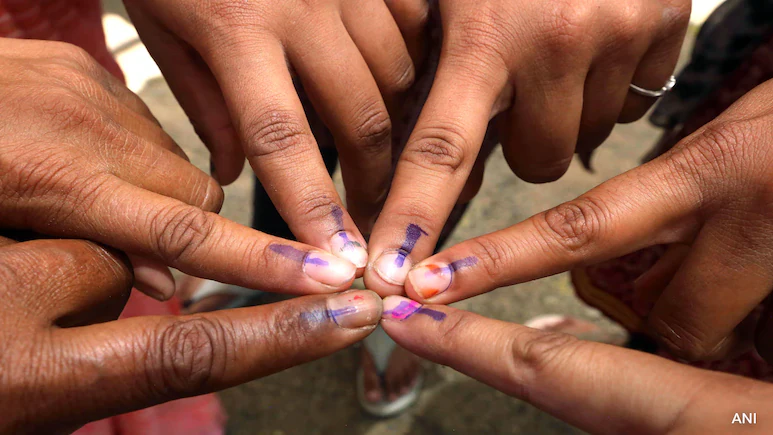
The Election Commission of India (ECI) on Thursday ordered a Special Summary Revision (SSR) of electoral rolls in 17 states and Union Territories, focused on including new voters and those left out by the controversial Special Intensive Revision (SIR), amid a raging controversy over the SIR.
Andhra Pradesh, Arunachal Pradesh, Chandigarh, Dadra and Nagar Haveli, Daman and Diu, Haryana, Jharkhand, Karnataka, Maharashtra, Meghalaya, Mizoram, Nagaland, NCT of Delhi, Odisha, Sikkim, Tripura, and Telangana), the schedule for SSR will be announced later. The order comes amid continuing protests over the Special Intensive Revision (SIR) of electoral rolls. The Opposition, INDIA bloc parties, and the youth group Cockroach Janta Party (CJP) are protesting in the national capital and have demanded the removal of Chief Election Commissioner Gyanesh Kumar. The states and UTs covered are Andaman and Nicobar Islands, Assam, Bihar, Chhattisgarh, Goa, Gujarat, Kerala, Lakshadweep, Madhya Pradesh, Manipur, Puducherry, Punjab, Rajasthan, Tamil Nadu, Uttar Pradesh, Uttarakhand and West Bengal. It makes no reference to the additional SIR declaration. That matter of an additional declaration is one of the many points of contention that are being heard by the Supreme Court as well. The same applies where one person is the objector in more than five cases. In each case of deletion, the ERO must pass a speaking order after hearing the person concerned and upload it on ECINET. Lists of claims and objections are to be published on chief electoral officers’ websites and handed to parties every week. “In States/UTs where SIR is going on or has just been completed (viz.
The states covered by this summary revision include West Bengal, Uttar Pradesh, Punjab, Bihar and Tamil Nadu, with January 1, 2027, as the qualifying date for those meant to be included. Draft rolls will be published on November 12 and final rolls on January 4, 2027. UP and Punjab are to go to the polls by February 2027. Opposition parties have raised concerns about the deletion of names during the exercise, and one point of dispute has been the additional declaration that applicants had to submit with Form 6 while SIR was underway. That declaration, one of the issues at the centre of the row, wanted applicants to map their parents to the last SIR, held about 20 years ago, just as existing voters had to under the SIR. Claims for inclusion are to be made in Form 6, the order says. In an October 7 clarification, the commission had said the declaration was an additional document used only in states and UTs where SIR is being conducted. It said the ordinary forms prescribed under the Registration of Electors Rules, 1960, apply in the non-SIR period. Form 7 is the one through which a deletion can be sought. It says names of permanently shifted and deceased electors may be removed only after a Form 7 application is received. Booth Level Agents (BLAs) of recognised parties may submit up to 10 forms a day to a Booth Level Officer (BLO) of the EC. If an agent files more than 30 forms during the claims period, the ERO must cross-verify them personally. Also, for the 3 States/UTs namely Himachal Pradesh, Jammu & Kashmir and Ladakh, where SIR has not been started so far, schedule for roll revision will be announced in due course of time keeping in view their weather conditions,” the order added.
The order on Thursday, October 15 , referred to the instructions issued by the EC to its state officials on September 29 “to undertake a special drive for the enrolment of left out/young/first time eligible electors”. The order sets out several “safeguards against wrongful deletions”. The Electoral Registration Officers (EROs) must personally cross-verify deletions “where the number of deletions exceeds 2 per cent of the total electors”. It cites the commission’s October 9 letter capping the number of Form 7 applications an individual elector can file, which it says is meant “to discourage bulk filing of applications”.
