The unthinkable and unbelievable, as Himalayan disaster risks are rising, bizarrely, India shutters key glacier and avalanche research facilities. It almost seems glacier and avalanche studies are no longer a priority for the Indian government.
Analysis carried out by the Indian Space Research Organisation using four decades of satellite data has revealed a worrying trend. His warning is particularly relevant today. The term is not a metaphor. After the Arctic and Antarctica, the largest concentration of ice and snow on the planet exists in the Himalayan region. Stretching across several countries and feeding some of Asia’s largest river systems, these mountains store vast quantities of freshwater that sustain hundreds of millions of people downstream. Yet at a time when climate change is accelerating glacier retreat, glacial lakes are expanding, and mountain disasters are becoming more frequent, India has quietly shut down two institutions that were specifically focused on understanding these very risks. ALSO SEE IMMERSIVE | A Himalayan Time Bomb Is Ticking The decision has raised uncomfortable questions. At a moment when the Himalayas are showing increasing signs of stress, is India reducing rather than strengthening its specialised scientific capacity to understand the cryosphere? The event once again highlighted how vulnerable the Himalayan region has become to climate driven changes occurring at high altitudes. Scientists have repeatedly warned that warming temperatures are altering snowfall patterns, accelerating glacier melt, destabilising mountain slopes and increasing the formation of glacial lakes. These processes are unfolding across the entire Himalayan arc, including India. The scale of the challenge is enormous. Satellite observations have dramatically improved our understanding of these remote regions. The numbers become even more alarming when examined closely. Many of these lakes lie at extremely high elevations. These are not merely scientific curiosities. Expanding glacial lakes can become serious hazards. The greatest concern is the possibility of a Glacial Lake Outburst Flood or GLOF. Such events occur when natural dams made of ice or loose moraine material fail suddenly, releasing enormous volumes of water downstream. Avalanches, landslides, earthquakes and intense rainfall can all trigger such failures. Recent years have demonstrated how destructive these events can be. Entire communities, roads, hydropower projects and critical infrastructure lie in the potential path of such disasters. Scientists say such changes are not isolated events but part of a broader transformation sweeping through the Himalayas. The irony is that while scientific concern has been growing, institutional capacity has been weakened. critics note that India no longer has a standalone dedicated apex national avalanche research institution While avalanche and terrain research continues within the new organisation. For many scientists, the closures raise a troubling question. Why reduce specialised institutional focus precisely when Himalayan risks are growing? Dobhal believes the answer lies not in reducing capacity but expanding it. “The whole area is very critical. He argues that Himalayan science requires collaboration across multiple disciplines including climatology, geology, geophysics, hydrology, chemistry, remote sensing and social sciences. Dobhal also calls for greater international cooperation among Himalayan nations. Glaciers do not recognise political boundaries. Rivers, hazards and climate impacts transcend national borders. Ice collapses, avalanches and glacial lake failures can travel rapidly downstream, affecting communities many kilometres away. Billions of people ultimately depend on water originating in Himalayan snow and ice. At the same time, they are increasingly exposed to hazards emerging from a rapidly changing cryosphere. The Himalayas remain India’s greatest natural freshwater water towers. They are also becoming one of its greatest climate vulnerabilities. As satellite imagery reveals expanding lakes, glaciers retreating and instability growing across high mountain landscapes, many scientists believe the need of the hour is not fewer specialised institutions but stronger ones.
Because glaciers are constantly changing and because of the difficult terrain in which they exist, the exact number remains a matter of ongoing scientific refinement. “What happened nowadays due to climate change, the glaciers are shrinking. This happened even as India continues to fight the highest altitude battle of the world at the Siachen Glacier at nearly 5000 meters altitude with Pakistan, here more lives have been lost due to frost bits and snow injuries than by enemy bullets.
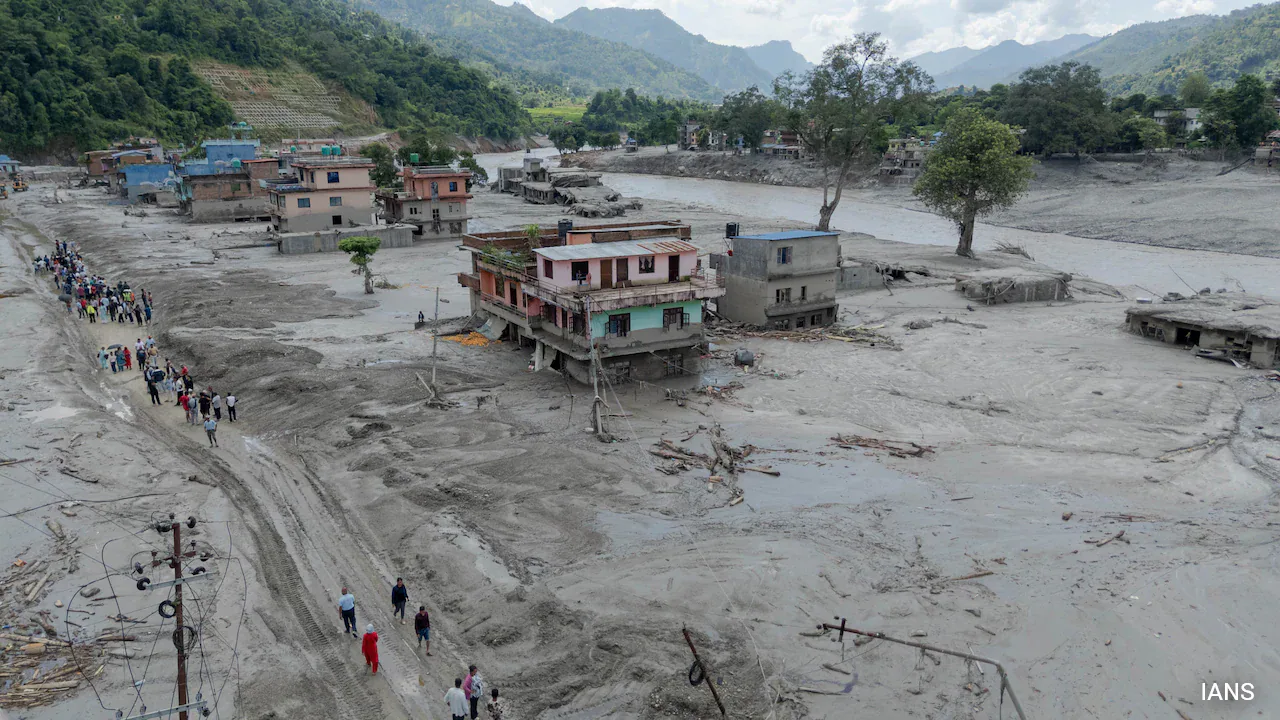
The Department of Science and Technology closed India’s only Centre for Glaciology in Dehradun in 2020, while the Defence Research and Development Organisation merged the country’s only dedicated Snow and Avalanche Study Establishment at Manali into a new entity focused on broader geospatial and terrain studies, diluting its mandate. The concern has become sharper following the recent devastating glacier related disaster in Nepal, where an enormous mass of ice, rock and debris crashed down a Himalayan slope, triggering deadly flooding downstream, killing nearly 1400 people. The Indian Himalayas contain roughly 9,500 glaciers distributed across Jammu and Kashmir, Ladakh, Himachal Pradesh, Uttarakhand, Sikkim and Arunachal Pradesh, according to the Geological Survey of India. ISRO reported in April 2024 that out of 2,431 glacial lakes larger than 10 hectares identified during 2016-17, as many as 676 glacial lakes have expanded significantly since 1984. Of those 676 expanding lakes, 130 are located within India. The distribution is spread across the major Himalayan river basins, with 65 lakes in the Indus basin, seven in the Ganga basin and 58 in the Brahmaputra basin. ISRO found that 601 of the 676 expanding glacial lakes have more than doubled in size over the past four decades. Another 10 lakes expanded between 1.5 and two times, while 65 lakes grew by about 1.5 times. ISRO’s analysis showed that 314 expanding lakes are located between 4,000 and 5,000 metres above sea level, while another 296 are situated above 5,000 metres. The Chamoli disaster in Uttarakhand in February 2021, the catastrophic South Lhonak Lake GLOF in Sikkim in October 2023 and the latest Nepal tragedy are reminders that high mountain hazards are becoming increasingly significant. The recent Nepal disaster has once again demonstrated that what happens at 7,000 metres does not stay at 7,000 metres.
The Himalayas are often called the “Third Pole” of the Earth. Dr Anil Kulkarni, a glaciologist and former ISRO scientist currently associated with the Indian Institute of Science, Bengaluru says ‘glacier and cryosphere research is the crying need of the hour, but it seems nobody cares. Dr DP Dobhal, veteran glaciologist and former scientist at the Wadia Institute of Himalayan Geology, Dehradun who spent decades studying Himalayan glaciers, says changing precipitation patterns are among the clearest indicators of climate change at work. There is a change in precipitation pattern,” Dobhal said in an interview to NDTV. “Of course, there should be a national centre,” he said. “Glacial science is the combination of all the sciences,” he said. India, Nepal, Bhutan, China and other countries sharing the Himalayan ecosystem need stronger mechanisms for collaboration, data sharing and joint scientific studies, according to him.
He noted that rain is now being observed at elevations where snowfall was previously expected, resulting in enhanced melting and increased instability in mountain environments.
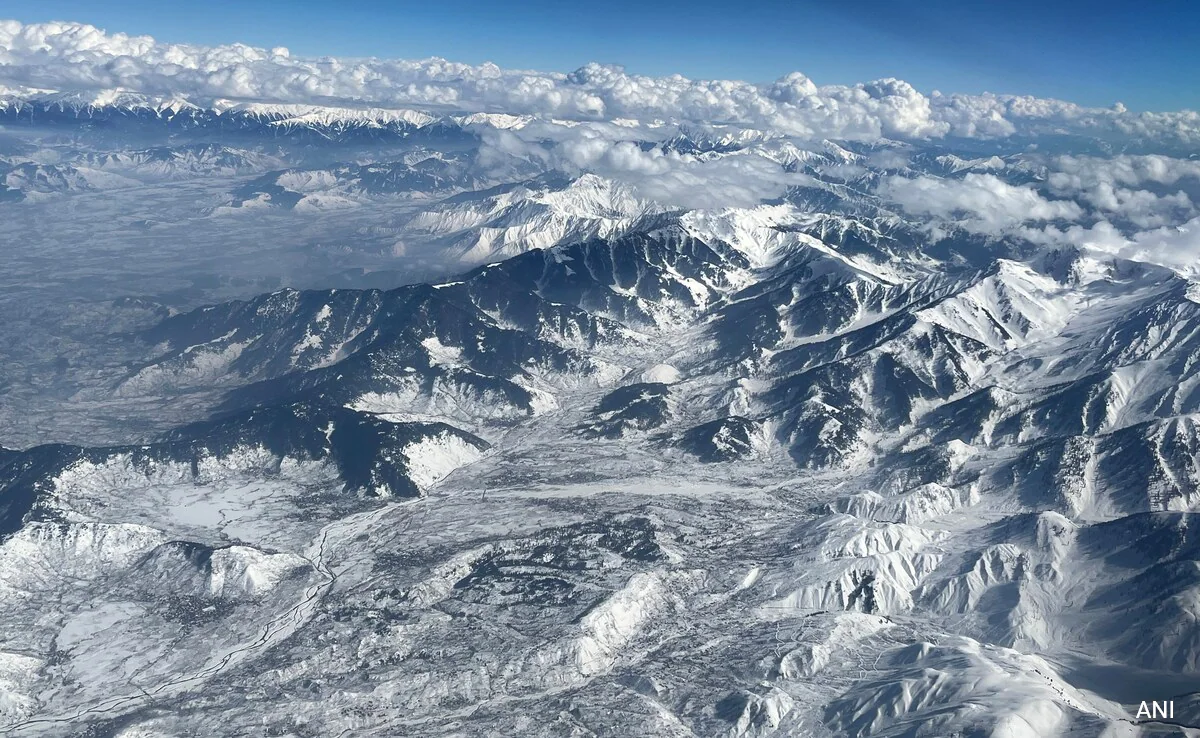
The snow line is moving upward and intense rainfall events are becoming more frequent. These changes are affecting the stability of glaciers, mountain slopes and glacial lakes. The Third Pole is changing before our eyes.
Areas that previously received snowfall are increasingly receiving rainfall, according to Dobhal.
The question is whether India has the scientific infrastructure needed to keep pace with those changes before the next disaster strikes.
The objective was ambitious. The centre was expected to become the nucleus for coordinated glacier research in the Himalayas and eventually evolve into a full-fledged national institute dedicated to glaciology. The initiative was designed to address a major scientific gap. Despite the importance of Himalayan glaciers for water security, disaster management and climate studies, India lacked a dedicated apex institution focused exclusively on glaciology. The centre helped create important baseline datasets and trained a new generation of researchers. Dobhal recalls that more than twenty people were trained under the programme and around ten researchers earned doctoral degrees. Several benchmark glaciers were established for long term monitoring. Scientific equipment was deployed in difficult mountain terrain and efforts began to build a systematic understanding of glacier dynamics. The project also had broader ambitions. Plans existed to create a national institute on glaciology in Mussoorie, establish specialised laboratories and collaborate with international experts. The project is closed and the infrastructure, the whole thing is merged into the mainstream of the Wadia Institute work,” he recalled. Asked whether he misses the centre, Dobhal’s answer was blunt. “Of course. This is a big shock for me. The story does not end there. India’s Snow and Avalanche Study Establishment, commonly known as SASE, was another specialised institution focused on mountain hazards. The institution played an important role in providing avalanche forecasts and safety information for the armed forces operating in difficult regions including Siachen.
India established the Centre for Glaciology in 2009 under the Department of Science and Technology, with the Wadia Institute of Himalayan Geology in Dehradun serving as the nodal agency. Yet in 2020, the Centre for Glaciology was shut down and merged into the parent institute. “We just received a letter in June 2020. Established in Manali in 1969, it conducted critical research on snow science, avalanches and high altitude hazards. In November 2020, the Defence Research and Development Organisation (DRDO) which managed it, merged SASE with the Defence Terrain Research Laboratory to create the Defence Geoinformatics Research Establishment headquartered in Chandigarh.
Dobhal says the closure came abruptly. Incidentally the new Secretary of the Department of Science and Technology, Dr Umesh Waghmare told NDTV ‘there are no plans of starting any new research center on glaciers’.