
- By Dr. Abhay Pandey
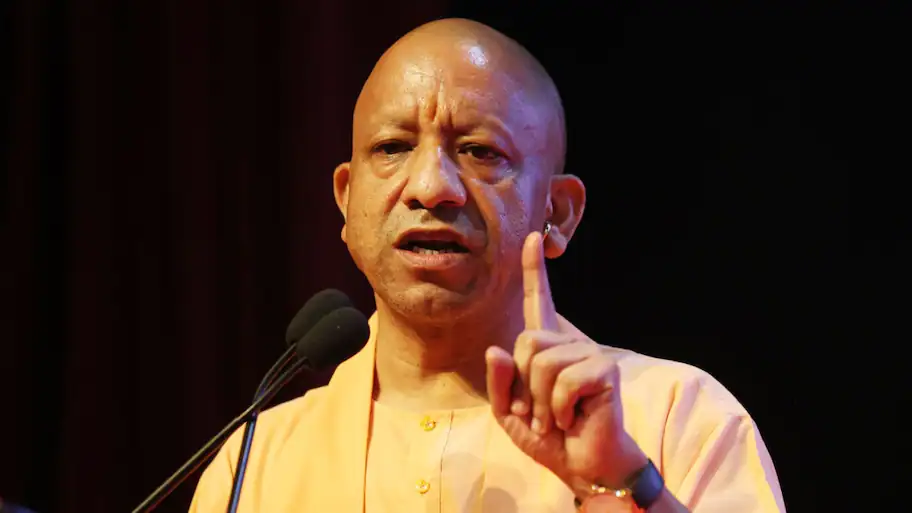
On Saturday, the photograph of Chief Minister Yogi Adityanath’s meeting with Prime Minister Narendra Modi in Delhi moved across social media with unusual speed. In politics, words often start an argument. Pictures often close it. The Prime Minister’s Office shared it. In official language, this was a courtesy meeting. The picture did not arrive in isolation. This was not polite praise for the occasion. For months there had been speculation about the organisation, about faces, and about leadership. Shah’s words put a stop to that talk. One day the compliment, the next day a photograph with the Prime Minister. The sequence itself is the message. Uttar Pradesh politics does not forget its photographs. The image went viral when the election was already at the door. The opposition made fun of it. The BJP read it as full support. That was not a chance. It was planning. The picture pushed those rumours to the side. The same mind game is being played again. The election is still some way off, but the organisation has already started work. Talk of booths, of western Uttar Pradesh, and of internal stock-taking has been in the air for some time. At such a moment, a stamp from the Centre calms the worker and unsettles the opposition. For the Samajwadi Party and other parties, one part of the plan has been to assume that the ruling camp is pulling in different directions. When a rift is visible, the attack is easy. When unity is visible, the attack loses its bite. Elections are not fought only with manifestos. They are also fought with signs. A hand on the shoulder, or a meeting photograph issued from an official account, does the same job: it removes doubt. The worker wants to know on whose face the fight will be fought. When that answer comes from the Centre, confidence rises, discipline improves, and inner rivalry is pushed down. The opposition wants to know where the split is. When the answer comes back that there is no split, its story begins to fall apart. This is not to say that one photograph decides an election. Law and order, welfare schemes, the organisation, and a scattered opposition strategy all moved together. But the photograph set the mood. It pulls the worker to the booth and forces the other side onto the back foot. That is why the opposition’s restlessness is only natural. It would like the debate to stay on Yogi versus Yogi or Centre versus the state. If the Centre is seen standing with the state’s main face, the debate returns to development, crime, and governance. That has not been comfortable ground for the opposition. The public, however, does not treat such signs as ordinary. The value of a message sent before an election should not be counted cheap. The worker is upbeat. The opposition is uneasy. In politics, a clearer opening chapter than this is rare.
In political language, it is being treated as a plain signal from the Centre ahead of the 2027 Vidhan Sabha elections. Speaking at a trade fair in Greater Noida, Shah said the face of Uttar Pradesh has changed, the mafia has been finished, the rule of law has been put in place, and places once known for the desi katta now make BrahMos missiles and AK-203 rifles. In November 2021, at Lucknow’s Raj Bhavan, the Prime Minister’s hand rested on Yogi Adityanath’s shoulder. In February 2022, just before voting, another photograph appeared – both leaders with their hands raised. Even in 2022, the win did not come from a picture alone.
The Chief Minister thanked the Prime Minister and said his guidance gives new energy to the building of a “new Uttar Pradesh. Defence Minister Rajnath Singh later said the Prime Minister had told Yogi he was playing like a sharp, attacking batsman and should keep his form. Even then, rumours said all was not well between Delhi and Lucknow. Calling the photograph “ordinary courtesy” therefore suits it.
Only a day earlier, Home Minister Amit Shah had praised Yogi Adityanath in public. In an election, mood arrives before the numbers. A party that knows how to read signals sends the quiet ones before the noise begins. The Delhi photograph, and the Home Minister’s praise a day earlier are two parts of that quiet message.
