
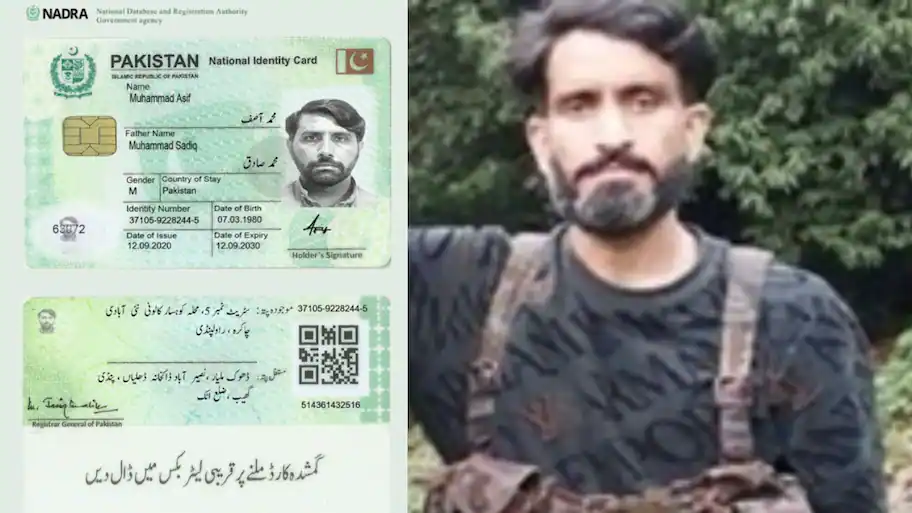
Security forces in Jammu and Kashmir are facing a significant operational challenge following the recovery of sophisticated SIM-free, tower-free LoRa (Long Range) communication devices from the body of slain Lashkar-e-Taiba (LeT) commander Hashim Musa alias Fauji during an encounter in the Gurwatkalan forest area of Budgam.
Forensic analysis by the National Technical Research Organisation (NTRO) confirmed that the devices were professionally manufactured and pre-encrypted rather than locally assembled. Similar encrypted LoRa sets and SIM-less devices have also been recovered from locations linked to the Pahalgam attack module in the high-altitude forests between Dachigam and Pahalgam. Unlike conventional mobile phones, LoRa radios operate independently of cellular networks, SIM cards, mobile towers and Wi-Fi. The devices use low-power radio frequencies in unlicensed industrial, scientific and medical (ISM) bands to enable mesh networking. Their signals can potentially reach handlers across the Line of Control with a minimal detectable footprint on standard mobile surveillance systems. This points to a streamlined supply chain linked to Pakistani handlers, with some reports suggesting Chinese-origin technology routed through Pakistan. The key challenge for Indian intelligence and security agencies is that the radios do not leave a conventional digital trail. They generate no SIM logs, tower connections or IP addresses, making real-time interception and tracking extremely difficult through traditional telecom monitoring methods, particularly in the thickly forested belts of South Kashmir. In response, agencies have shifted tactics towards electronic warfare. Advanced radio frequency (RF) spectrum scanners have been deployed and specifically tuned to detect the low-power, localised LoRa signals in forest areas of South Kashmir. Electronic jammers used during cordon-and-search operations are also being recalibrated to disrupt the specific ISM bands on which LoRa devices operate, potentially breaking their mesh relay chains. Signal intelligence units have meanwhile moved towards using direction-finding equipment to identify the physical origin of transmissions in real time. Investigations into the scale of LoRa use and ways to disrupt the networks remain ongoing.
Each handset can act as a relay, allowing operatives to transmit encrypted text messages, GPS coordinates and SOS alerts over distances of roughly 10–15 kilometres in dense forest or mountainous terrain.
A rugged, military-grade black “LoRa Ultra” handset was found near Musa’s body along with an AK-47 and other items. The pre-configured and pre-encrypted devices are being described by security officials as “terror communication 2.0”. Officials said terrorists have largely abandoned traditional mobile phones in favour of these off-grid communication systems, forcing security agencies to recalibrate their surveillance strategies.
