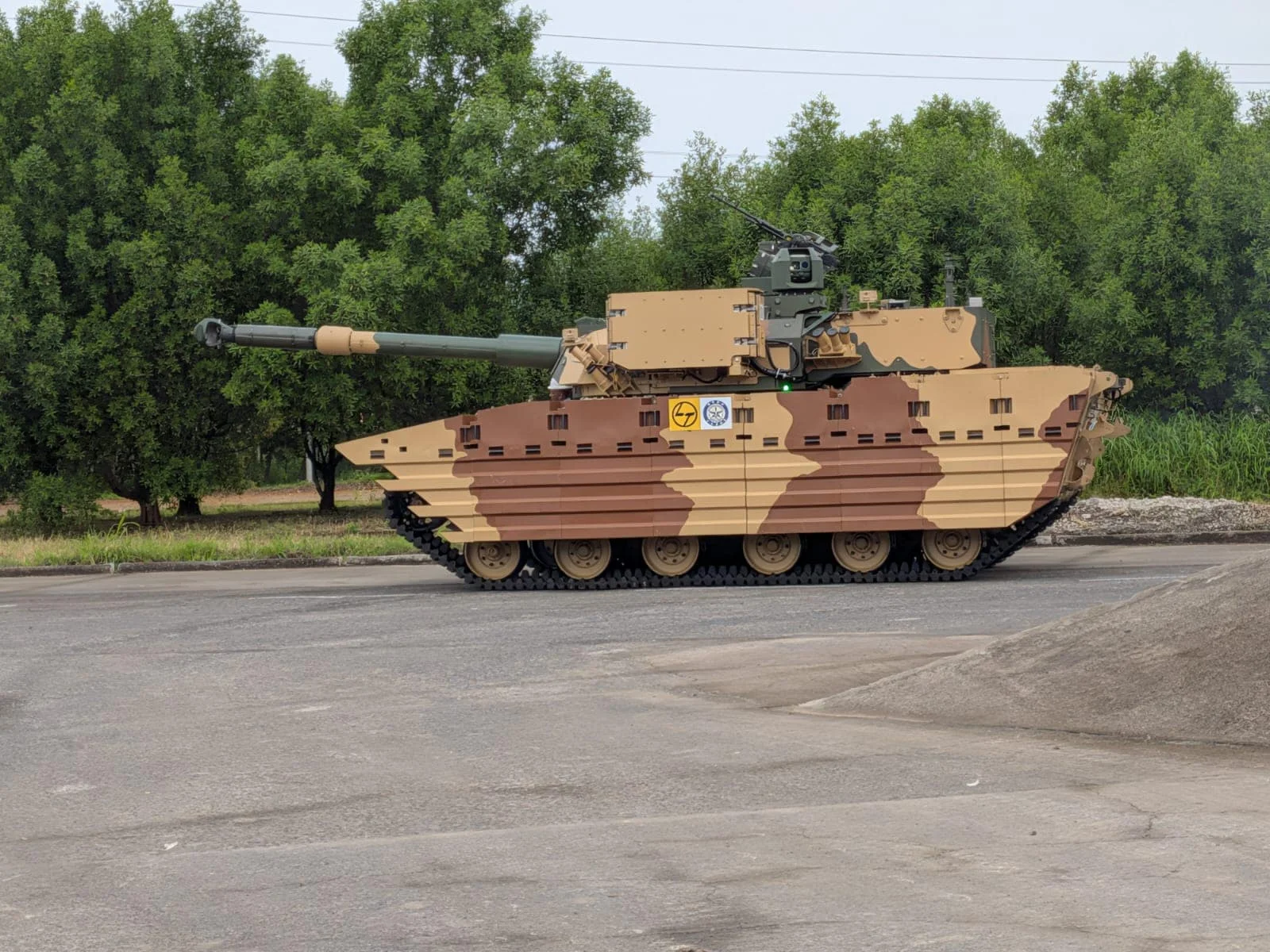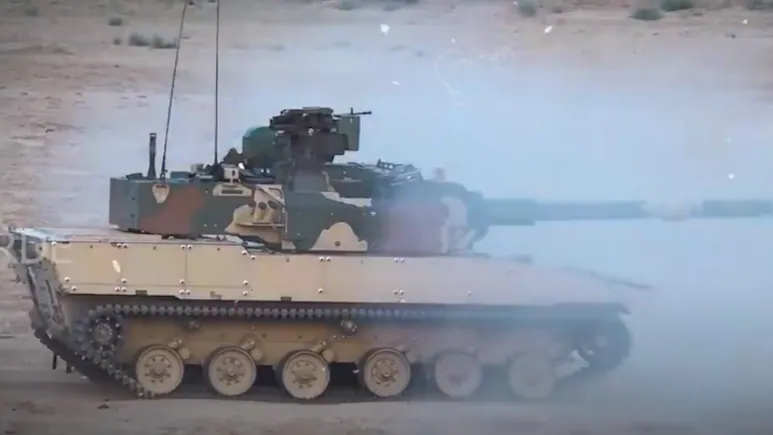
The government is looking for a middle ground that would allow a limited first batch of indigenous Zorawar light tanks, built by Larsen & Toubro, to be inducted soon, with better-protected versions to follow.
He was speaking on Sunday at NDTV’s Defence Conclave 2026.
“It’s an example of what I mentioned, that you start with a certain level of requirements, then somewhere down the line you want something more, which delays the induction process,” said RK Singh, India’s Defence Secretary.
The first is the DRDO-designed Zorawar. Mahindra Defence, the second-lowest bidder, will also build a prototype. The selection took three years and was delayed further by a rival’s objections, which were later found to be invalid.
The government, however, appears intent on getting the Zorawar into service in phases, even though the initial order of 59 tanks covers less than a fifth of the Army’s requirement of about 354 light tanks. Only about 18 of those 59 are likely to be inducted in the first batch. The sanctioned cost for designing and developing the Zorawar, including one prototype, was Rs 234.5 crore, according to the Defence Ministry’s reply in the Lok Sabha in July 2024. India needed the tank to counter China’s Type-15 light tank along the Line of Actual Control in Ladakh. The Army’s heavier T-72 and T-90 tanks lose engine power at high altitude. At about 25 tonnes, the Zorawar is roughly half their weight, handles mountainous terrain well, and two can be airlifted in an Indian Air Force C-17 heavy transport. The tank has completed trials above 4,200 metres at Nyoma. India is buying about 354 light tanks through two separate routes. The Defence Ministry nominated DRDO and L&T to supply the first 59 tanks, and Singh expects L&T to receive an initial order for about 18 soon. Tata Advanced Systems emerged as the lowest bidder in this program, reportedly worth about Rs 20,000 crore, and must deliver two prototypes within 130 weeks, according to reports.
The second route covers the remaining 295 tanks through a “Make-I” competition, under which the government funds up to 70% of prototype development costs.