
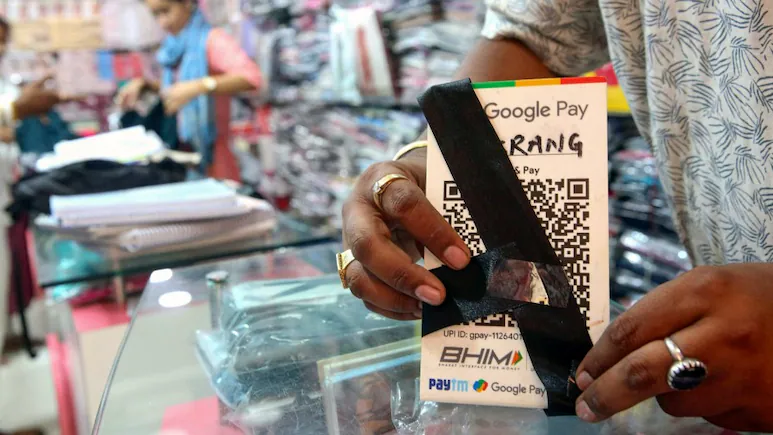
The Supreme Court on Monday refused to stay the Centre’s decision to impose charges for UPI person-to-merchant transactions above Rs 2,000.
A bench of Chief Justice of India Surya Kant and Justices Joymalya Bagchi and V Mohana directed the Centre, the Reserve Bank of India and others to file their counter affidavits within four weeks. The top court has sought an affidavit from the Centre, explaining the basis for the decision. Read: Supreme Court Refuses Stay On Charges Above Rs 2,000. What It Means For You Additional Solicitor General N Venkataraman, appearing for the Centre, told the bench that 96 per cent of people using the gateway were exempt. Ending nearly six years of fully free UPI payments, the Centre earlier this month introduced a 0.4 per cent fee on transfers worth more than Rs 2,000 made to merchants through the platform from October 15, while ring-fencing person-to-person transactions as well as small payments from any charge. The charge will be borne by merchants, not consumers, and will be capped at Rs 300 for transactions of Rs 75,000 or more, according to the new framework. Person-to-person UPI transfers and merchant transactions of up to Rs 2,000 will remain free. Essential and thin-margin sectors — railways, telecom, insurance, fuel and agricultural inputs — will pay a flat MDR of Rs 5 per transaction above Rs 2,000. Payments into mutual funds, securities and through stockbrokers and dealers will attract 0.02 per cent MDR, also capped at Rs 300. Earlier, the National Payments Corporation of India (NPCI), which operates the UPI network, introduced in 2016, said the revenue will support investment in infrastructure resilience, cybersecurity, fraud prevention, innovation and customer service.
“It is less a legal and more a technical issue,” the bench observed.
