
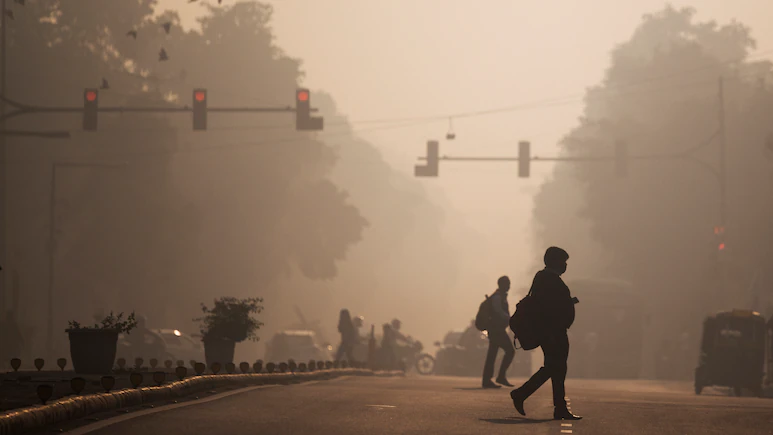
Delhi and the National Capital Region are breathing heavily, and Diwali has not even arrived. The Commission for Air Quality Management (CAQM) has applied Stage-III restrictions of the Graded Response Action Plan (GRAP) across the entire NCR with immediate effect as a precautionary measure.
The Air Quality Index (AQI) has crossed 400, which puts it in the “severe” category.
Dr Guleria said there is growing evidence, from India and abroad, that living for long in polluted air raises the risk of lung cancer. He said poor air exposes the lungs to mutations, and both lab studies and clinical data suggest the risk rises among non-smokers as well.
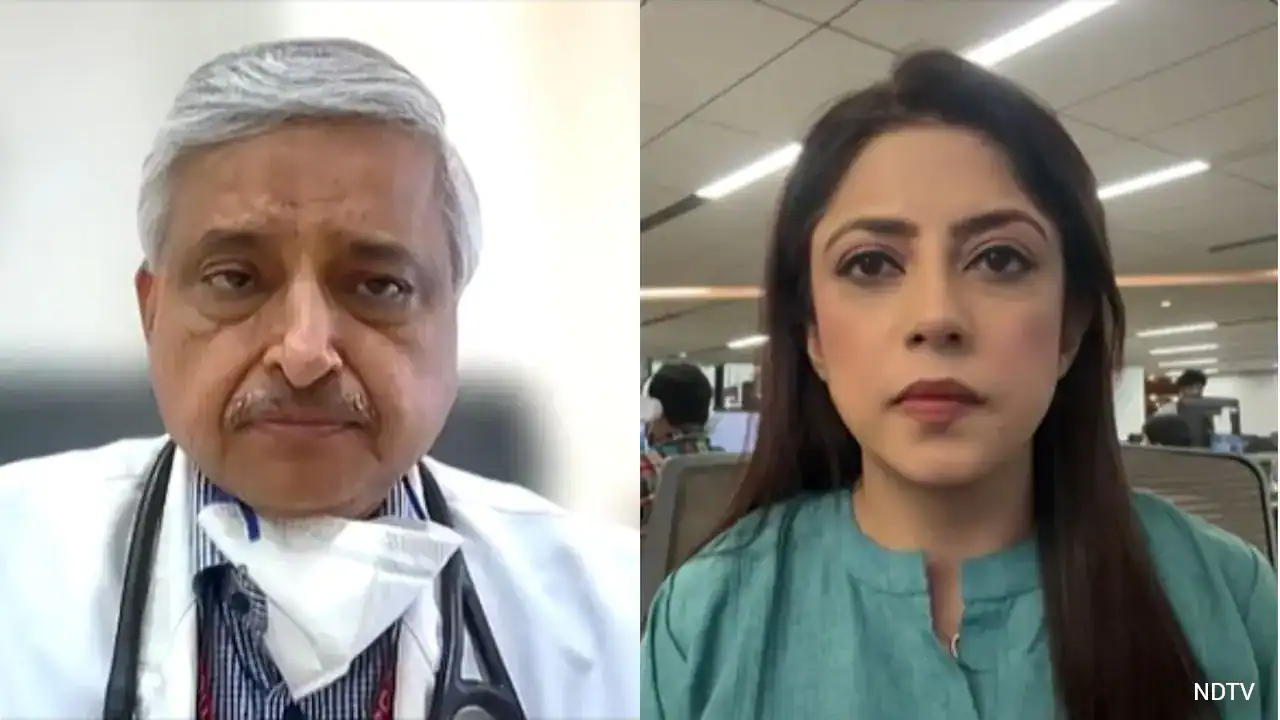
Delhi’s Environment Minister Manjinder Singh Sirsa has asked residents to cooperate. To understand what this air is doing to the body, NDTV’s Sneha Mordani spoke to Dr Randeep Guleria, a well-known pulmonologist and former director of Delhi’s All India Institute of Medical Sciences (AIIMS). “The air quality that we are seeing right now, and Diwali has not come yet, is a very serious problem. I would say that this is a silent epidemic. Elderly people and children, who form the high-risk group, are affected the most. So, in normal people too, and those who have underlying chronic respiratory disease, which is seen more in our elderly people and children, it is causing a significant problem in the high-risk group, and it is also seen to be very painful in normal people. Once there, they cause inflammation in the blood vessels. There’s a higher chance that they could get blocked, and this can lead to acute heart problems. “So air pollution adds to the risk of heart attacks along with high cholesterol, age, family history, and smoking. “We were initially saying that lung cancer occurs predominantly in smokers. He added that both indoor and outdoor pollution contribute. One is emission sources such as vehicles, construction and crop burning. The other is the weather, since cold air keeps pollution at ground level and wind speed is low in a landlocked region. “I’m not saying that we can solve this problem overnight. But policymakers need to have a plan in place with timelines and to look at sustainable and practical solutions, which are relevant to our country, in terms of finding how we can decrease these emissions. It irritates your nose. It irritates the throat. Dr Guleria shared a set of steps for residents:
We are seeing that in OPD, due to our breathing difficulty, the number of patients in both OPD and emergency have increased by almost 20 per cent. READ | Stricter Pollution Curbs Under GRAP-III Imposed In Delhi-NCR Ahead Of Diwali “This is basically their airway hyperactivity due to pollution. When PM 2.5 levels are very high, the particles pass from the lungs into the bloodstream.
“I urge the residents of Delhi that starting tomorrow, the weather is going to worsen further, and winds are expected to come to a complete standstill, which will cause the AQI to rise even higher, as the Meteorological Department forecasts near-zero wind movement,” he said in a video posted on X. Dr Guleria said the air quality before Diwali is already a major concern. On who is affected, he said, “Patients who have asthma, COPD, even patients who have heart problems, have worsening breathing difficulty and chest tightness. “But what is worrying is that we’re also seeing normal individuals who have no basic respiratory problems, are healthy, but now are complaining of irritation in the throat, breathing difficulty, wheezing, a little persistent cough, which is related to what we call bronchial hyperactivity,” he said He said the pollution irritates the airways and throat, causing these symptoms in otherwise healthy people. It’s affecting those who have underlying conditions, but even healthy people are having problems nowadays,” he said. Asked whether dirty air can trigger heart attacks, Dr Guleria said yes. READ | “Hope You’re Enjoying Weather”: Supreme Court’s Quip On Delhi Pollution “And those who have an underlying tendency for having a heart problem, the coronary arteries which are present in the heart, they get swollen. If you look at the literature, it’s been said that living in an area where air quality is bad is as high a risk for heart disease as is high cholesterol or regular smoking,” he added. So we are actually increasing the chance of heart problems by living in an area where air quality is very bad,” he said. Lung Cancer In People Who Never Smoked Dr Guleria said there is growing evidence, from India and abroad, that living for long in polluted air raises the risk of lung cancer. He said poor air exposes the lungs to mutation changes, and both lab studies and clinical data suggest the risk rises among non-smokers as well. We are now seeing lung cancer in the majority of non-smokers,” he said. He said he is seeing young patients and women with lung cancer. Data from his registry shows non-smoking lung cancer is now seen more often than smoking-related lung cancer, according to him. He recalled a young journalist who told him she was the only non-smoker in her office, yet developed the disease. On the government’s interest in cloud seeding, he said, “This is just a knee-jerk reaction and just not a long-term solution. ” He said a lasting fix has to look at two things. That is the source from which pollution is emitted,” he said. Asked about the stench and the sting in the eyes, he said: “So the current high, poor-quality air with emissions of various sulfur dioxide, nitrogen oxides, and ground-level ozone all irritates the eyes.
He also pointed to a study done years ago at AIIMS and other Delhi hospitals. It showed that when air quality turns bad, there is a sudden rise in emergency visits for respiratory problems over the next four to six days. Many of these patients are admitted to wards or the ICU, and the trend is linked to high mortality and morbidity.
