
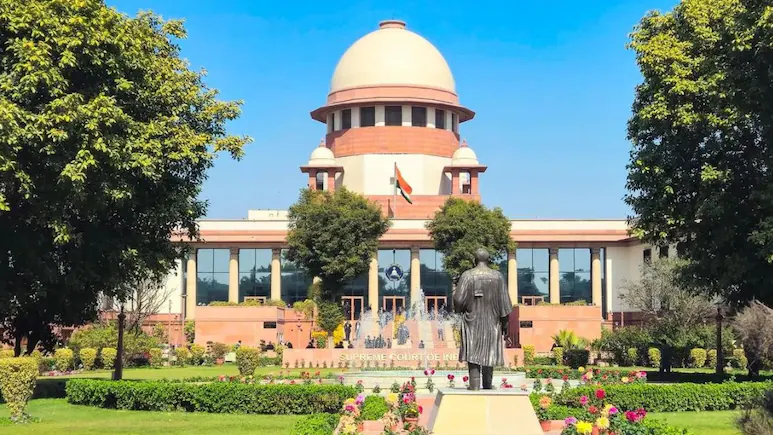
The Supreme Court on Thursday remarked that the country is witnessing an increase in crime because of the court’s “forgiving nature” in commuting death sentences, and that this has to “come to an end somewhere”.
Justice Dipankar Datta recalled a case in which the Supreme Court commuted the death sentence of a man who had raped and murdered his elder daughter.
A bench of Justices Datta and Sheel Nagu was hearing a plea seeking premature release of a life convict in a murder case, whose death sentence had been commuted to life imprisonment. To illustrate his point, Justice Datta recalled a case in which the Supreme Court commuted the death sentence of a man who had raped and murdered his elder daughter. “The father goes to jail on life imprisonment on the basis of the mother’s testimony. “On the younger daughter’s testimony, he is given the death sentence. And then the death sentence is commuted to a life sentence by the Supreme Court on the ground that he did not murder the younger child.
“Forgive, forgive, forgive… you have to draw a line somewhere,” Justice Dipankar Datta said. After some years, the father comes out on parole and murders the mother in front of his younger daughter,” he said. That is why we say, our forgiving nature has to come to an end somewhere,” Justice Datta said. He said the court also has to take into account the rising number of crimes in the country, indicating that a balance needs to be struck in cases where death sentences are commuted to life imprisonment.
