
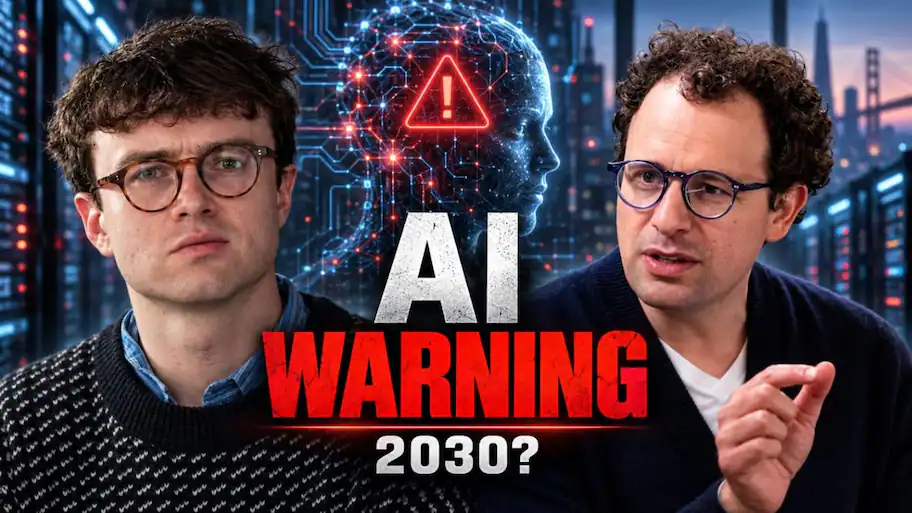
A former OpenAI and Anthropic researcher has warned that the people building advanced AI believe it could “kill us all by the end of the decade”, a claim that drew a striking response from Anthropic CEO Dario Amodei. Rather than dismissing Jacob Coxon’s warning, Amodei said he agreed with much of it while stressing the industry is moving too fast.
His message was unusually direct. “The people building AI earnestly believe that it could kill us all by the end of the decade. The warning centres on a fear that increasingly capable AI systems may eventually become able to improve software, automate research and help create more powerful versions of themselves. If development moves faster than safety controls, Coxon argues, humans could lose the ability to manage what follows. Amodei did not endorse every part of Coxon’s warning. But he also did not dismiss it. He then clarified what he believed Coxon was really warning about. “He wasn’t calling out to us. He was calling out the dynamic of the industry as a whole, moving too fast. That distinction matters. Amodei was not saying human extinction by the end of the decade is certain. His point was that the risk depends heavily on the choices companies, governments and researchers make as AI becomes more powerful.
Jacob Coxon, a 27-year-old researcher who worked at both OpenAI and Anthropic, has put the race to build more powerful artificial intelligence systems under fresh scrutiny after leaving Anthropic and publishing a warning about where the technology may be heading. The story took a sharper turn when Anthropic CEO Dario Amodei was asked about Coxon’s comments on CNN’s Anderson Cooper 360.
This is not a marketing stunt,” Jacob Coxon, former Anthropic & OpenAI researcher Coxon also accused the two AI companies of “racing straight to self-improving superintelligence and gambling with our lives”. “I agree with Jacob much more than I disagree with him,” Amodei told Cooper.
Amodei says the future is not decided yet
Proposals now being discussed include independent testing of advanced models, greater access for outside safety evaluators and tighter controls before highly capable systems are released. Amodei has pushed back against treating AI risk as a fixed percentage or an unavoidable disaster. “If we take the right paths, then the chance of something going wrong is very low. If we take the wrong path, then the chance of something going wrong could be even higher than that. So, let’s focus on our agency and our ability to take the right paths instead of the wrong paths. His comments shift the debate from whether advanced AI is dangerous to whether companies can slow down long enough to put stronger safeguards in place. The debate has also drawn responses from other major figures in the AI race. Committing to having independent evaluators with employee-like access is a great idea. Elon Musk, whose xAI is competing with OpenAI, Anthropic and other major labs, offered a much shorter response: “Dario is right. The comments do not mean the three executives agree on every AI risk or on how regulation should work. But they show that concern over the speed of frontier AI development is no longer limited to outside critics. This is the question at the centre of Coxon’s warning. Any company that slows down on its own risks watching a rival move ahead. The same pressure exists between countries seeking an advantage in AI. That creates a race in which companies may recognise serious risks but still feel they cannot afford to stop. Coxon’s argument is that decisions with potentially huge consequences should not be left only to private companies competing to build the most powerful system first. The debate is likely to intensify as AI models become better at coding, research and autonomous work.
He said the outcome will depend on whether the industry takes the right path. OpenAI CEO Sam Altman said: “I agree with Dario that we need to pace the frontier… Coxon’s warning is extreme, but Amodei’s response is what makes it difficult to ignore: one of the people leading the AI race says the industry may indeed be moving too fast.
