
Written by Dr. Dewanshu Kumar Singh
A place-name is never only a label. It carries history, custom and the memory of those who once gave a region its sense of itself. That is why the renamings of recent years in Uttar Pradesh cannot be reduced to a change of signboard. Under the Yogi Adityanath government, districts and railway stations have been tied to saints, freedom fighters and religious-cultural figures already rooted in local identity.
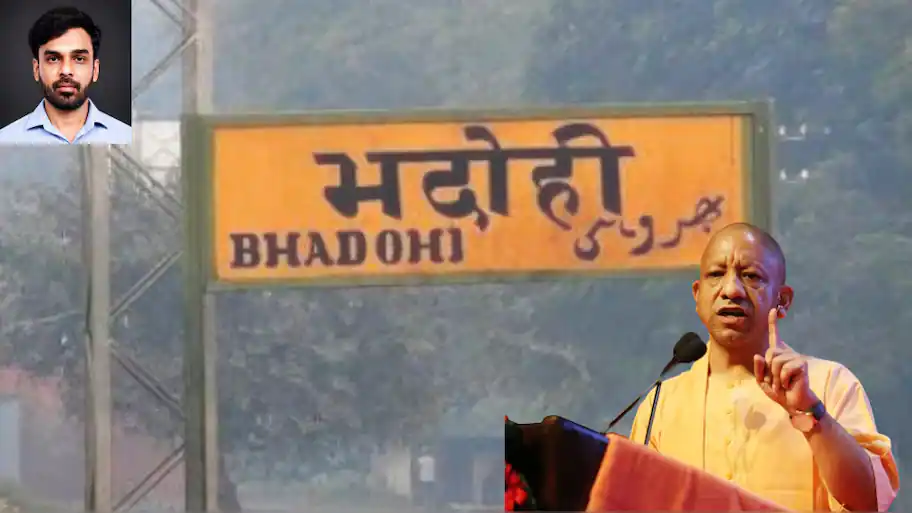
Bhadohi is the latest instance. The Chief Minister has declared that the district will again be called Sant Ravidas Nagar Bhadohi. This is not a first naming. This is the point at which the Yogi government’s idea of development with heritage shows its second side. Development, on this reading, is not exhausted by roads, expressways, airports and industrial projects. To bring a region’s cultural identity into view is itself part of the story of growth and of tourism. When a place is identified with its history, its cultural weight becomes visible to those who might otherwise pass it by. A state’s identity is not made only of its present. It is also made of its past, its inheritance, and the figures who shaped collective memory. The renamings under this government present themselves as a policy of giving that inheritance a public name.
The present decision can therefore be read not as novelty but as a reconnection: an attempt to bind the district’s public identity once more to the saint’s legacy, and to treat that legacy as part of the place rather than an optional prefix.
The district had earlier borne Sant Ravidas’ name, before the Akhilesh Yadav government restored “Bhadohi” in 2014.
