
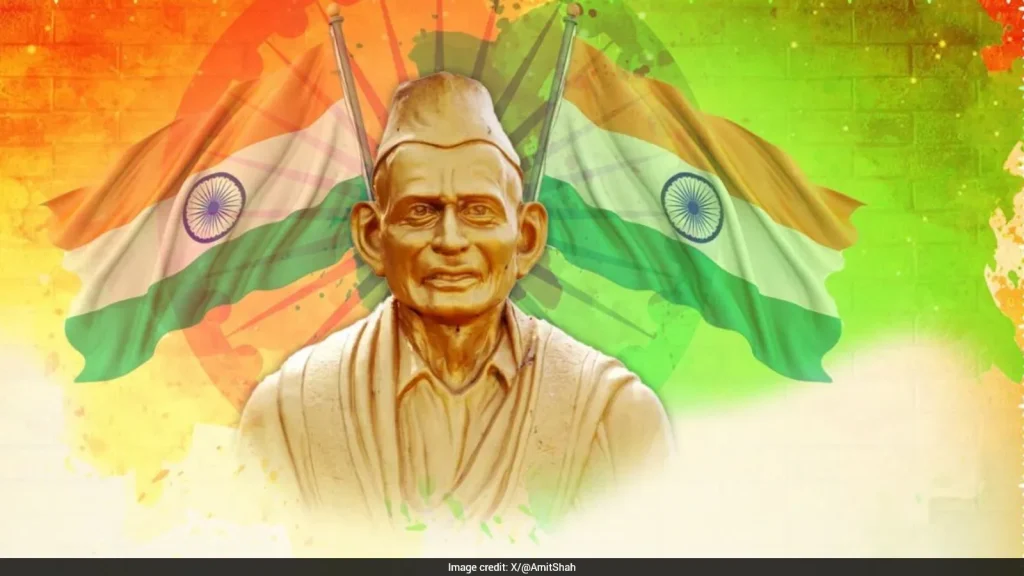
Every August, as the Tricolour rises across India on its Independence Day , one name returns to the national conversation: Pingali Venkayya, the freedom fighter whose flag designs helped shape one of the country’s most recognisable symbols. Home Minister Amit Shah and other political leaders also marked the occasion.
On August 2, Prime Minister Narendra Modi paid tribute to Venkayya on his 150th birth anniversary, remembering his “invaluable role” in giving India the Tricolour and saying the flag continues to fill Indians with pride.
Venkayya’s fascination with national flags became a serious pursuit after he saw British Union Jack being hoisted at a Congress session. The sight of Indians saluting the British flag hurt him deeply. He documentd his research in a booklet titled A National Flag For India. The proposed flag featured red (sacrifice), white (purity) and green (hope), with a central Charkha symbolising India’s unity amid diversity. The design evolved further. Sixteen years later, the Constituent Assembly made another crucial change.
In 1906, he proposed the idea of a national flag at All India Congress Committee session and dedicated his life to studying flags of 30 nations, analysing colours, symbols and patterns. The decisive moment came in 1921, at the Indian National Congress meeting in Vijayawada when Venkayya’s design caught Gandhi’s attention. In 1931, the Congress formally adopted a Tricolour with saffron, white and green, with the spinning wheel at its centre.
