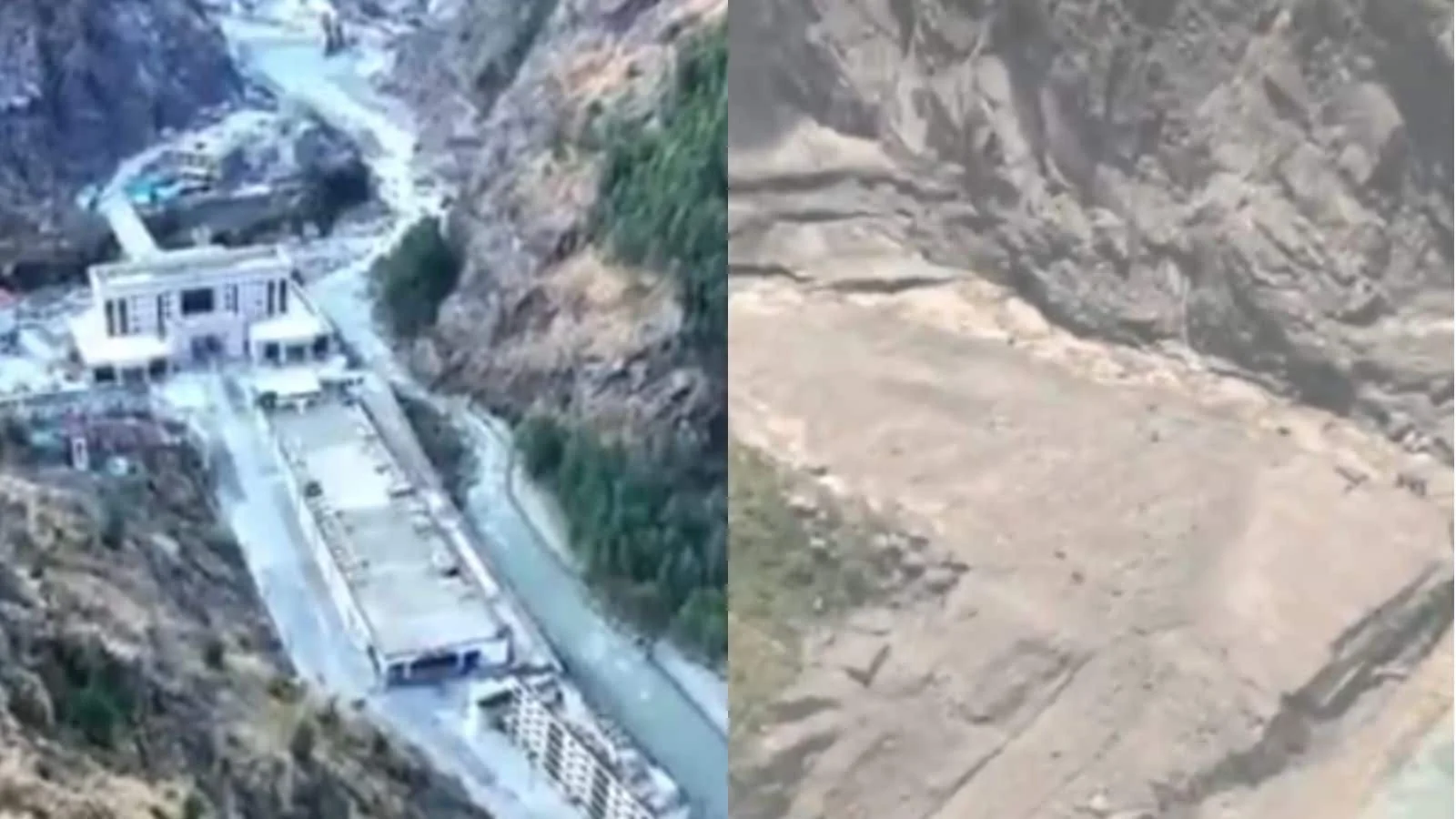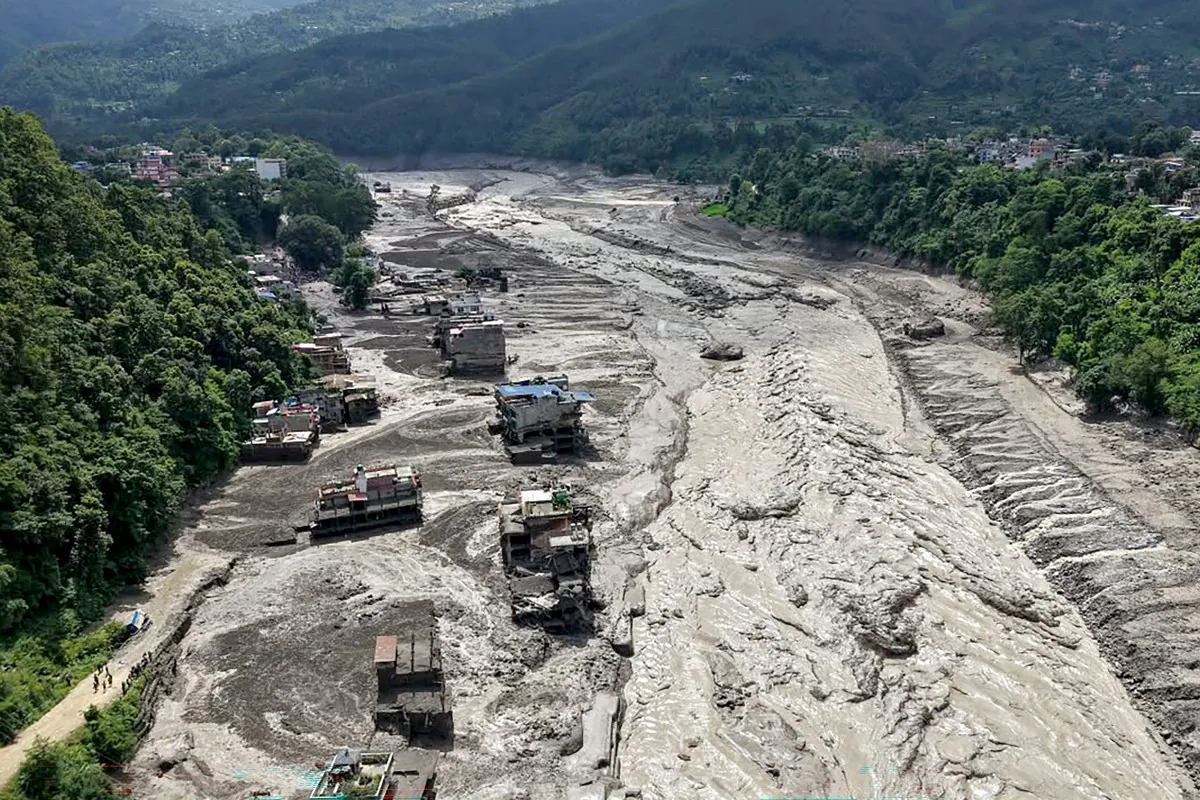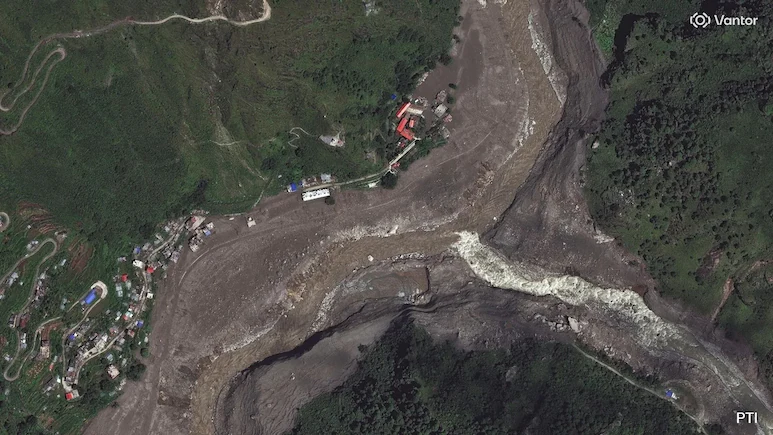
Various theories have emerged regarding the catastrophic floods in Nepal. One prevailing view attributes the disaster to a glacial collapse and the subsequent flow of thousands of tonnes of debris.
A sudden collapse of ice and rock in the upper Himalayas sent a massive volume of water and debris rushing downwards, causing widespread destruction, according to the US Geological Survey (USGS).
A third theory points to the bursting of a glacial lake as the cause of these conditions. They attributed the event to rapid climate change and shifts in weather cycles driven by global warming. As glaciers recede, they leave behind thousands of tonnes of debris, including massive boulders, stones, sand and soil. Continuous rainfall causes water to accumulate within this debris. When triggered by events like landslides or earthquakes, this mass suddenly destabilises and rushes down steep slopes, unleashing a destructive deluge upon the low-lying areas.
One emerging theory suggests that due to global warming and climate change, precipitation at altitudes of 4,000 metres is occurring as rain rather than snow. Because rising temperatures – a consequence of climate change – are causing glaciers to retreat rapidly, this rainfall is extremely hazardous. The impact of global warming has become so severe that areas at 4,000 metres, which once received snowfall, now experience rain.
At the time, various theories circulated regarding the cause – ranging from the presence of a glacial lake to heavy rainfall – but scientists from the Wadia Institute provided a specific explanation in their report. Global warming and rising temperatures caused rapid snowmelt, leading to water pooling in that area. The report indicates that the unique geomorphology of Mount Shrikanth, combined with continuous rainfall, destabilised the steep slopes, resulting in devastation across Harsil and Dharali. The nature of this event also closely mirrored the disaster in Nepal. The flood in the Tamak Nala – fueled by water, debris and massive boulders – swept away a large iron bridge as if it were a mere straw.
He told NDTV that glaciers worldwide are rapidly retreating due to global warming and rainfall is now being observed at altitudes of 4,000 metre – areas where snow should typically be present. Similarly, a devastating flood occurred in the Tamak Nala of Chamoli’s Niti Valley in August 2026. Factors such as global warming and rainfall occurring at altitudes as high as 4,000 metres are cited as the underlying causes. A glacier base is situated at an altitude of 4,000 metres, where vast quantities of moraine have accumulated over time.