
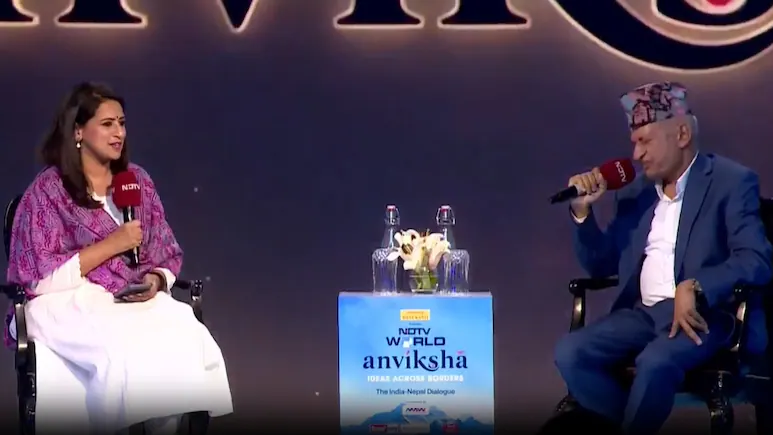
Pradeep Gyawali, former foreign minister of Nepal told NDTV today that the huge change brought about Gen Z protests last year was unexpected.
This, he said, was because Nepal is a “post-conflict” society.
Nepal’s former minister Pradeep Gyawali said, “For the government change, the violent way was not expected and I am very, very concerned that if it becomes a precedent in the future, it will be very, very detrimental”
“It is quite natural that in every emerging democracy there will be a gap between the delivery capacity of the government and the people’s expectation. “Nepal has shown a very unique example how we can bring the change peacefully. We abolished the monarchy who run the country over 240 years with peaceful means.
Speaking at the NDTV World Anviksha Summit in Kathmandu, Gyawali said while gaps between people’s expectations and the government’s delivery is expected, the form that people’s anger took was unprecedented. So there were some grievances… which were quite natural but the government never expected that the language of disappointment will be so destructive and the language of the political change will be the violence,” Gyawali told NDTV. We bring the then rebels Maoist and settle that conflict with peaceful negotiation,” he said. But for the government change — “the violent way was not expected and I am very, very concerned that if it becomes a precedent in the future, it will be very, very detrimental,” he added. Asked how he would rate the Balen Shah government and its policy of maintaining equal distance from India and China, Gyawali said foreign policy of every country should focus on national interest. In case of Nepal, it is laid down in the country’s constitution, he said. “We expect that the government of the day will also follow the balanced national interest driven foreign policy,” he said. It is an “opportunity for Nepal having a neighbor in south with largest population, growth engine and leading in many areas… in the north, second largest economy, leading the innovations,” he said.
