
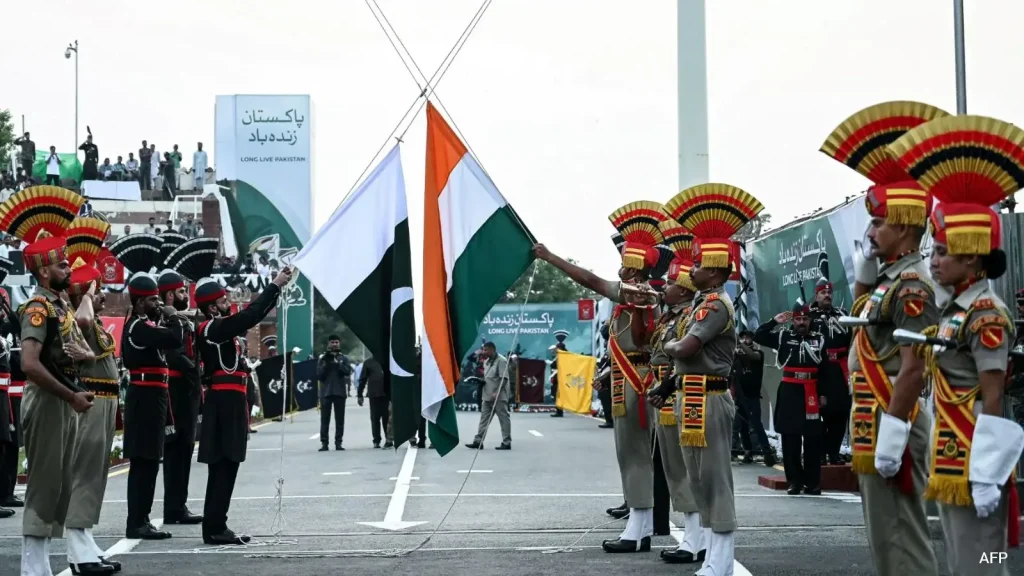
Eighty years ago, a line was drawn — one that cut a state not just into two halves but tore apart people sharing the exact same culture. Decades later, while the trajectory of the two countries remains miles apart politically, they still share a deep connection owing to their common cultural identity.
In fact, a viral video from Pakistan’s Parliament recently showed a leader directly challenging the speaker’s directive to switch from Punjabi to Urdu, “Why should I not speak it? It is my mother tongue. Ahmad Raza Punjabi, president of the Punjabi Parchar organisation in Lahore, Pakistan — which advocates for the official use and recognition of Punjabi at various levels in the Islamic Republic — reflected on this marginalisation. The battle has also reached the halls of parliament, where provincial leaders have begun standing up to challenge the status quo. Over the past few years, resolutions supporting the cause were passed in the Punjab Assembly to draft formal legislation. Recent announcements by provincial leaders — such as commitments by Punjab’s Education Minister Rana Sikandar Hayat — have promised to introduce Punjabi and Shahmukhi instruction into the official school curriculum. However, while announcements have been made, Ahmad noted that most promises have not translated from paper to ground reality: “The government has not provided substantial support to Punjabi anywhere. However, practically, no major work has been done on it yet. Ahmad argued that while the government acknowledges the problem, it does little to address it. In Pakistani Punjab, cultural pride is deeply rooted in Sufi poetry, brought to life by the enduring legacies of Baba Bulleh Shah, Baba Farid, and Waris Shah. Timeless folk traditions like Heer Ranjha and Sassui Punnhun continue to offer a shared cultural vocabulary, highlighted annually at the Bulleh Shah Festival, the Punjab Festival, and the International Punjabi Conference.
This momentum culminated in February 2019, when Justice Karim Bakhsh of the Lahore High Court ruled in favour of another petition filed by activists, officially directing the government to enact legislation making Punjabi a compulsory academic subject. Beyond the legal battles surrounding identity assertion in Pakistan, Punjabi activists in 2018 successfully persuaded the government to mark the 1st of Chet (March 13-14) — the beginning of the Punjabi calendar — as official Punjabi Culture Day.
Last year, Maryam Nawaz, the current Punjab Chief Minister, made some statements regarding Punjabi culture and language, saying that our children should learn Punjabi.
