
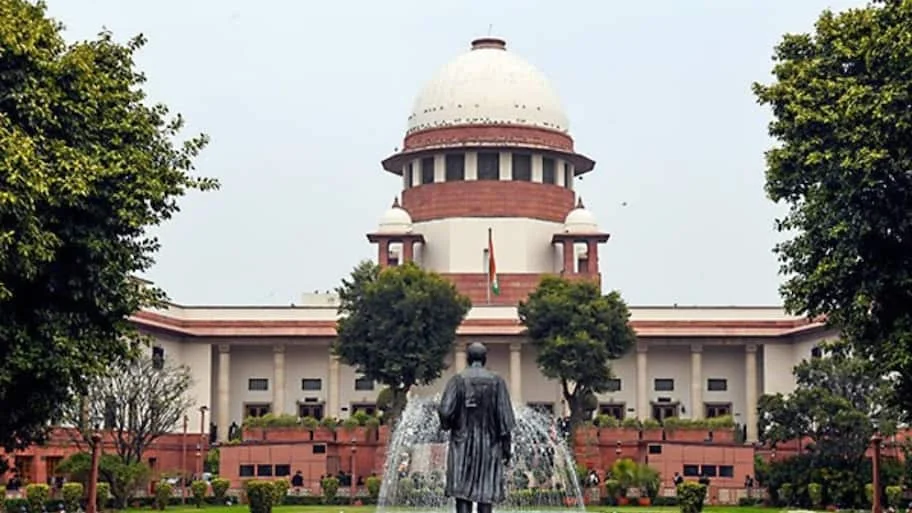
The Supreme Court issued a significant ruling on judicial officer recruitment on Friday, reaffirming its May 2025 decision that mandates prior law practice for entering the judicial service. However, the Court has reduced the required practice period from three years to one year. To compensate for the two years of experience no longer required, the Court has introduced a rigorous post-selection training and clerkship program designed to provide the necessary practical skills for new judicial officers.
Under the modified framework, candidates who clear the judicial service examination will first be designated as Trainee Judicial Officers. They must complete one year of intensive training at the concerned State Judicial Academy. This period will count as equivalent to one year of practice at the Bar. Thereafter, they will undergo a further one-year structured law clerkship—six months under the supervision of the Principal District Judge or members of the higher judicial service, followed by six months under a sitting judge of the High Court. During both the academy training and the clerkship, Trainee Judicial Officers will receive emoluments equivalent to one-half of the gross remuneration payable to a Judicial Magistrate First Class. Upon completion of the clerkship, the High Court judge under whose supervision the trainee has served will submit a reasoned evaluation report on the candidate’s progress and suitability. Only if this report is found satisfactory will the trainee be appointed to the regular post and become entitled to the full pay scale and service benefits. Law graduates applying for judicial service examinations within this period will not be required to demonstrate any prior practice. They will be deemed to have completed one year of active practice and need not produce a certificate of practice. However, upon selection they must still undergo the full one-year academy training and one-year clerkship described above. This practice must be verified through a certificate issued only after the candidate’s presence and participation in effective judicial proceedings have been duly recorded in accordance with the mechanism prescribed by the Court. Successful candidates will, in addition, still complete the same academy training and clerkship.The Court directed all High Courts to amend the relevant judicial service rules within three months to incorporate these changes. The new scheme will operate for five years, after which the Supreme Court will review its working. Gavai along with Justices Masih and Chandran, had mandated three years of practice (counted from provisional enrolment) as a condition for appearing in the Civil Judge (Junior Division) examination. It applied prospectively and required at least one year of training before successful candidates could preside over a court. High Courts and State governments were directed to amend their service rules accordingly. By reducing the practice requirement to one year while embedding rigorous post-selection training and evaluation, the Court has sought to balance the need for practical exposure with concerns about accessibility and the readiness of fresh law graduates.
Importantly, the new regime will come into force only from April 1, 2027. The Court has provided a transition window until March 31, 2027. From April 1, 2027 onwards, candidates must possess at least one year of active law practice before applying. The May 2025 judgment, delivered by a Bench led by then Chief Justice B.R. The transition period until March 2027 provides a buffer for aspirants already in the pipeline, while the five-year review clause leaves room for future course correction based on experience.
The clerkship will also be treated as equivalent to one year of practice, thereby fulfilling the overall three-year practical-experience requirement envisaged in the earlier ruling.
