
US President Donald Trump has praised India’s electoral system and Election Commission, arguing that the United States could learn from the way elections are conducted in India. His remarks have triggered a political debate in India, with the ruling party highlighting them as recognition of the strength of the country’s democratic institutions, while opposition parties have questioned the context of Trump’s comments.
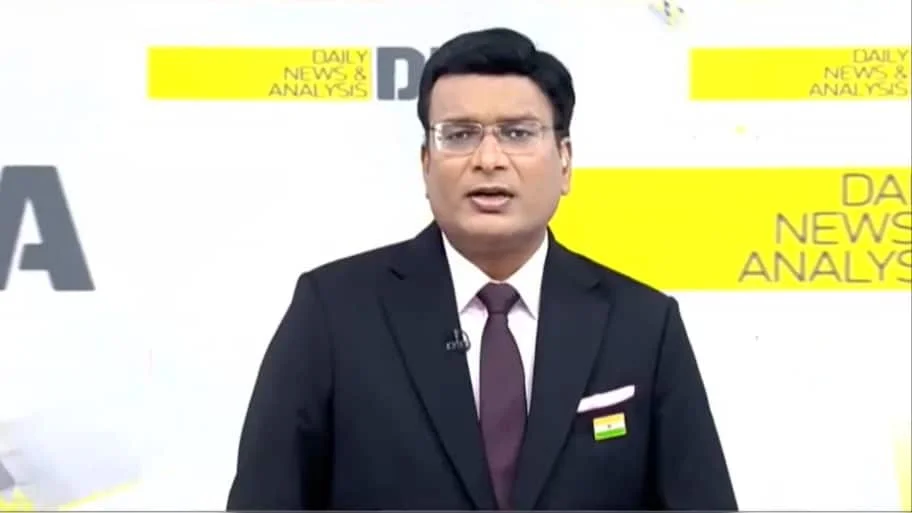
In today’s episode of DNA, Rahul Sinha, Managing Editor of Zee News, conducted a detailed analysis of Trump’s remarks and examined the differences between the electoral systems of India and the United States. The programme also looked at how India’s election machinery has evolved over the decades and why its model is being discussed in the US. Trump referred to India while advocating the ‘SAVE America Act’. In a social media post, he cited Chief Election Commissioner Gyanesh Kumar’s question about how elections could be conducted in the US without valid photo identification. Sinha noted that the US has a decentralised electoral structure unlike India, where the Election Commission of India oversees elections across the country. In America, elections are administered at state and local levels, with Secretaries of State and local election officials playing key roles. The programme highlighted several differences between the two systems. Voting rules vary considerably from one American state to another, including regulations governing postal voting and voter identification. State-level election officials are generally politically affiliated, while the drawing of electoral boundaries is also largely handled at state level. The US does not have a single national voter ID card, and voting technology varies across states.
Trump also pointed to India’s previous election, in which more than 640 million people voted, with less than one per cent voting by post, while voters were required to have valid photo identification.
The analysis also discussed the Electoral College system and the absence of a central election authority comparable to the Election Commission of India. The debate over Trump’s remarks also produced political reactions in India. Opposition leaders questioned his praise for the Election Commission, with the Congress party asking why Chief Election Commissioner Gyanesh Kumar should not become Trump’s election commissioner. The programme argued that Trump’s comments were directed at India’s electoral system rather than any particular political leader or party. Sinha further highlighted the scale of India’s electoral machinery, noting that the Election Commission conducts elections across a vast and diverse country and maintains a system aimed at ensuring that eligible citizens can vote. The programme also pointed to India’s transition from ballot papers to EVMs and the subsequent introduction of VVPAT as examples of changes made to the electoral process.
These structural differences have contributed to recurring political disputes in the US over voter registration, identification, polling locations and constituency boundaries, according to the programme.
