
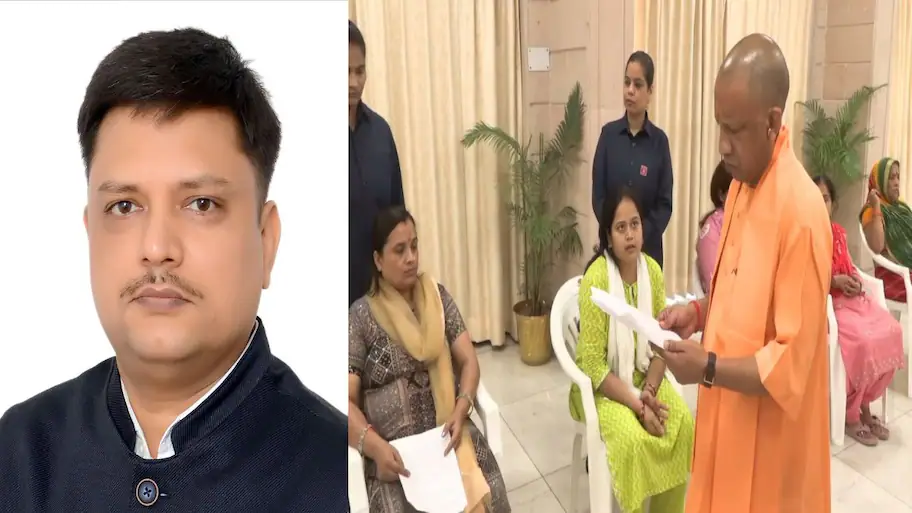
By Manish Khemka
One such case involved Shyam Sonkar from Ayodhya, who approached Yogi on Monday over his sister’s serious illness. Politics often forces leaders into simple categories. A chief minister is described as either tough on crime or sensitive to people’s problems. Uttar Pradesh Chief Minister Yogi Adityanath’s style of governance offers a more complicated picture. His administration has taken a hard line on crime, while his public interactions with people at Janata Darshan show a personal response to individual hardship. Two recent incidents in the state illustrate these different sides. The murder of Haryanvi music video artist Ankit Baliyan in Shamli was followed by police action against two men suspected of involvement in the killing. Around the same time, a brother from Ayodhya approached the chief minister over his sister’s serious illness and received help with her treatment. The two incidents say something about the way Yogi approaches governance. Law and order demands enforcement, while public grievances require direct intervention. Both have become visible parts of his political and administrative style. The police action came after Ankit’s family had demanded quick action. His father had given the police five days to act against those responsible for the murder. “We have given the police five days. If the police do not take action against those involved in the murder within five days, we will withdraw our FIR on the sixth day. After the alleged encounter, Ankit’s father thanked the police and called for action against the remaining suspects. “We thank the police. “The action that has been taken has given us some relief. “The attackers were keeping an eye on our entire family. The alleged encounter has also drawn scrutiny over the circumstances in which the two men were killed. “I will not use the word encounter. The police will tell you what the circumstances were and what retaliatory action they took. An encounter is not a planned policy. The state’s policy is not encounters. The police have to take action. Samajwadi Party MP Awadhesh Prasad has called for an investigation into the incident. Yogi’s public meetings with people at Janata Darshan offer a different picture of his approach. These meetings bring people to the chief minister with problems involving medical treatment, education, pensions and other basic needs. Yogi directed officials to arrange her admission to Lohia Hospital, start her treatment and have the government bear the full cost. The incident fits into a pattern seen at the Janata Darshan, where the chief minister has personally intervened in individual cases brought before him. Khushi Gupta, a deaf and mute girl from Kanpur, is another example. During her meeting with Yogi, he placed his hand on her head and assured her that arrangements would be made for her treatment and education. There have also been cases involving children needing medical care. Yogi has intervened in the treatment of a seven-month-old child with heart disease and expressed concern about a child suffering from thalassemia. People have also approached him over the cost of medical treatment, difficulties with a student’s education and problems faced by elderly people over pensions and shelter. His intervention in such cases has made the Janata Darshan an important part of his public engagement. The harder side of Yogi’s administration is most visible in its approach to crime and law enforcement. The more personal side appears when people bring individual problems directly to him. The two approaches come from different parts of governance. Crime requires police action and investigation. A medical emergency may require officials to move fast when a family cannot manage the cost of treatment. The distinction is important in judging any government. Strong law enforcement does not address every problem faced by citizens. Welfare measures and personal intervention also do not replace the need for effective policing. The Uttar Pradesh government has given strong emphasis to crime control in its governance.
A GPS was also installed in Ankit’s car, which means our family could also have been attacked. Ankit, a resident of Bantikhera village in the western Uttar Praadesh disrict, was killed on August 26 after leaving a gym in the Kotwali area. Within 86 hours, two suspected shooters, identified as Sumit and Mohit from Sonipat in Haryana, were killed in an alleged encounter.
The police said their investigation found that four shooters were involved in the murder. The police said the two men opened fire during an attempt to stop them and that two police personnel were injured. After that, we will do whatever we can, otherwise we will sit at home,” he had said. The remaining two shooters should also be encountered as soon as possible,” he said. Ankit’s wife, Seema Baliyan, also said the police action had given the family some relief. We hope the police will arrest those who are still left,” she said. She also said the family had been under surveillance and claimed that a GPS device had been installed in Ankit’s car. We will feel safe only after the remaining criminals are arrested,” she said. Union Minister Jayant Chaudhary, who visited Bantikhera, said he did not want to describe the incident as an encounter without knowing the circumstances. The police are taking action,” Chaudhary said. He said the circumstances that led to the police firing should be examined through due process. Sonkar told the chief minister his family is extremely poor, and he is struggling to get his sister admitted to a hospital.
At the same time, Yogi’s Janata Darshan has given people a direct route to place personal grievances before the chief minister.
The Shamli case represents the first. The cases brought before him at the Janata Darshan represent the second. How these two aspects of governance are viewed depends on the issue and the circumstances. The police action has to be judged through law and due process, while individual interventions can be judged by whether the person seeking help actually receives the assistance they need. That makes the two recent incidents useful examples of the different responsibilities that come with the Office of Chief Minister. (Manish Khemka is the chairman of Global Taxpayers Trust and a member of the GST Grievance Redressal Committee, Uttar Pradesh. The views expressed in this article are those of the author and do not necessarily reflect the official policy, editorial stance or position of Zee News, its management or its parent company.)
His political image has therefore been defined by both his approach to law and order and his interactions with people seeking help.
