
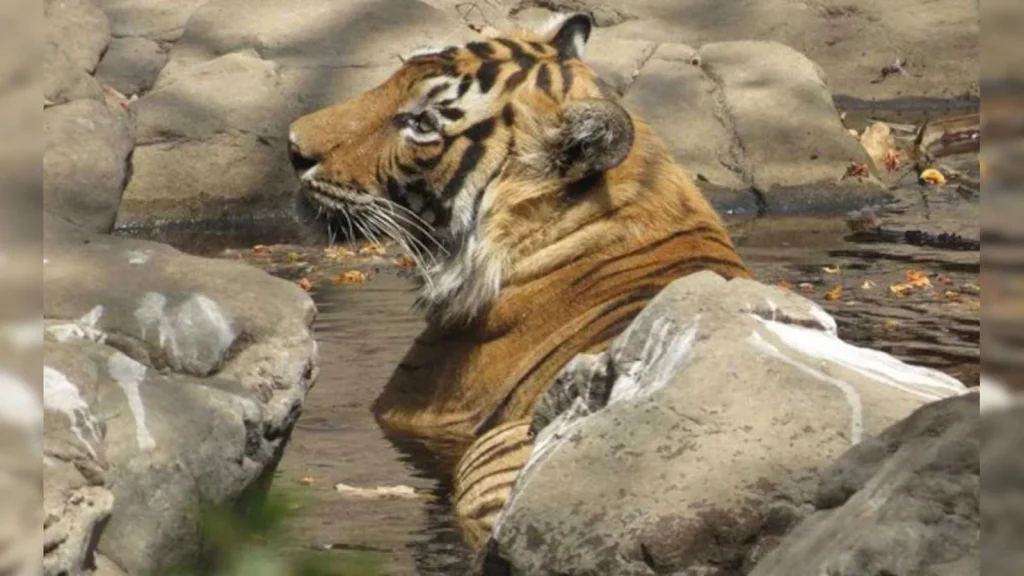
Giloy, the climbing herb found in gardens and forests across India, has found an unusual patient in Madhya Pradesh — a young tigress battling canine distemper, one of the most dangerous viral diseases affecting wild carnivores.
For more than a month, the injured tigress from Rani Durgavati Tiger Reserve, Nauradehi, has been under treatment at Jabalpur’s School of Wildlife and Forensic Health. Her recovery has been uncertain, with periods of improvement followed by weakness. But wildlife officials say an attempt to supplement her treatment with giloy has shown encouraging results. That prompted the team to explore supportive natural treatment. “She had a problem, but the medicines were further weakening her immune system. The unusual treatment is only one part of a much larger veterinary protocol, and officials are not suggesting giloy as a cure for canine distemper. The tigress remains under close medical supervision and is receiving a complete course of treatment. Canine distemper is regarded as a serious viral threat to wild carnivores. The virus can affect the respiratory, gastrointestinal and nervous systems and has been documented in several carnivore species. Domestic dogs can act as an important reservoir of infection, making the disease a particular concern in wildlife landscapes where villages, livestock, stray dogs and wild carnivores share the same ecological boundaries. “When she came here, she was extremely weak and could not even walk properly.
For the Jabalpur team, the challenge has therefore been not merely to heal an injured tiger but to help an already weakened animal fight a dangerous viral infection.
Dr Sameeta Rajora, Madhya Pradesh’s Principal Chief Conservator of Forests (Wildlife), told NDTV that while the tigress was undergoing treatment, there were concerns that the medicines were further weakening her immune system. We thought of treating her in a natural way and we got very good results from giloy,” Rajora told NDTV. Dr RK Sharma, Director of the SWFH Centre, told NDTV that the tigress has now been undergoing treatment for around one-and-a-half months and is showing visible signs of improvement. Now she has started walking and eating,” Sharma said.
