
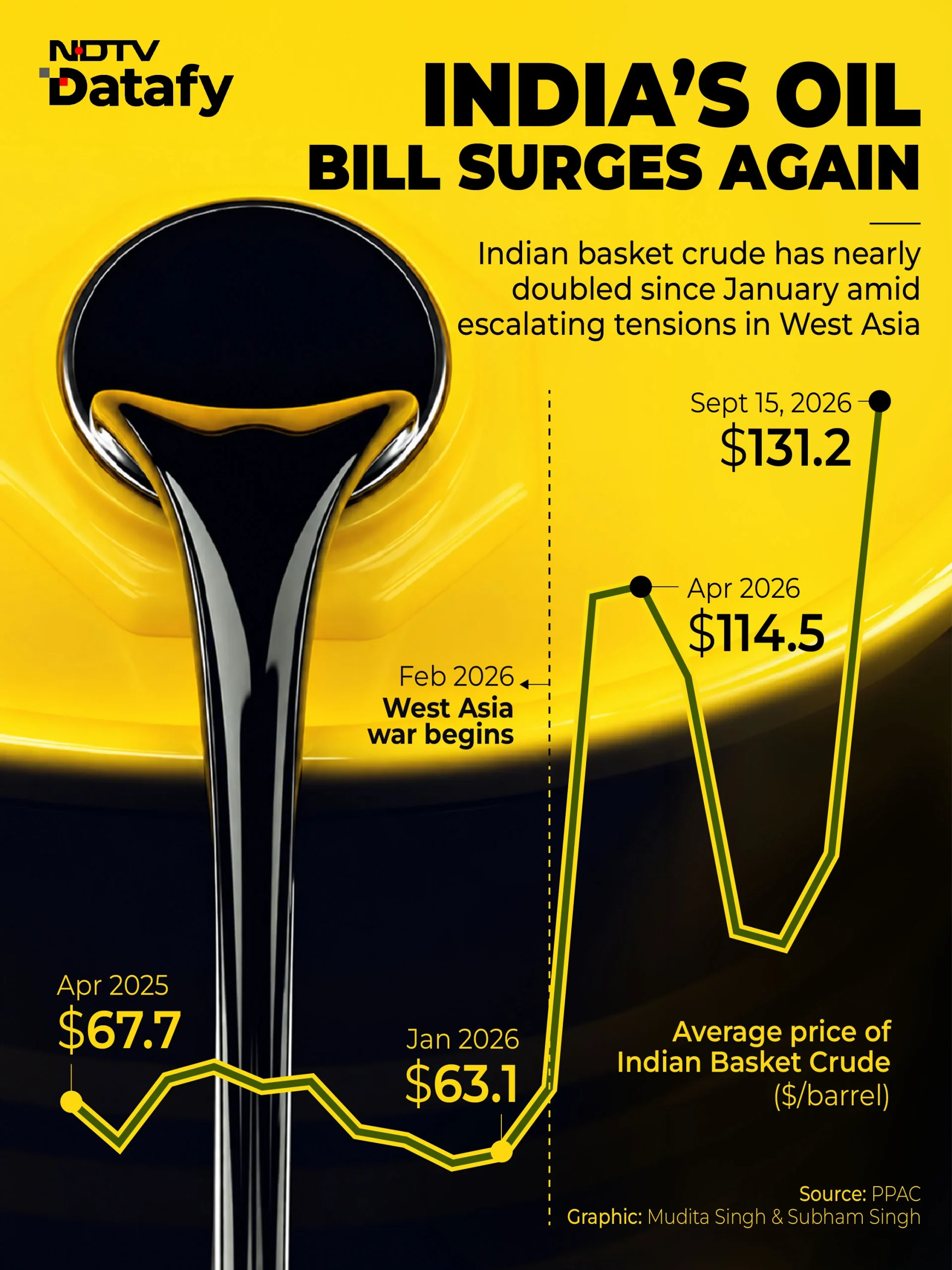
As tensions in Middle East continue to push crude oil prices higher, concerns over India’s energy security have once again come into focus. For a country that imports lion’s share of its crude requirement, such a spike would normally raise fears of an energy crisis. The Indian basket crude oil price, which largely remained around $60-70 per barrel through 2025, has climbed sharply in 2026, crossing $110 per barrel in March and April before crossing $130 per barrel in September 16, 2026.
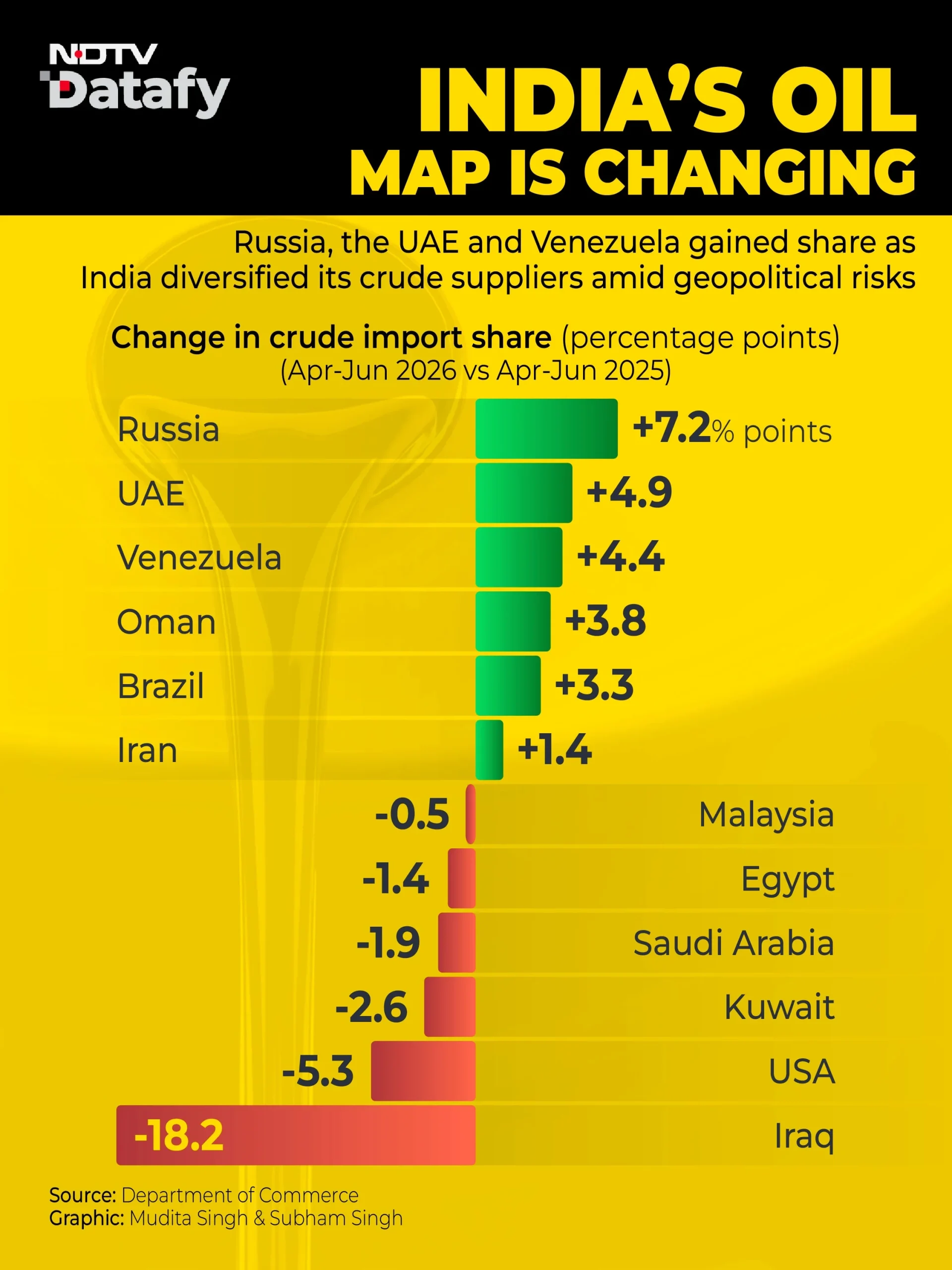
India’s response was not simply about securing crude supplies. The consumption data from PPAC suggest a balancing act at home as well. Petrol and diesel demand continued to grow despite higher crude prices, indicating that mobility and goods movement remained largely unaffected. Meanwhile, consumption of LPG, kerosene and naphtha declined during the period. The pattern suggests that the impact of higher energy costs was not uniform across fuels, allowing overall energy demand to remain manageable despite the oil price shock. Natural gas data reveal another important aspect of India’s response. Rather than allowing the burden of higher energy costs to fall equally across all sectors, consumption patterns indicate that household and city consumers were largely protected. Taken together, the numbers point to a broader story. India’s response to the latest oil shock has not been driven by lower energy demand. Instead, it has been built around securing crude supplies from a wider range of countries while ensuring that household energy needs and transport fuel consumption remain largely unaffected. Yet the data show that diversified imports, stable fuel demand and targeted energy management have so far helped India avoid the kind of widespread energy stress that often accompanies major global oil disruptions.
With crude oil prices once again above $130 per barrel amid escalating tensions in Middle East, the challenge is far from over.
