
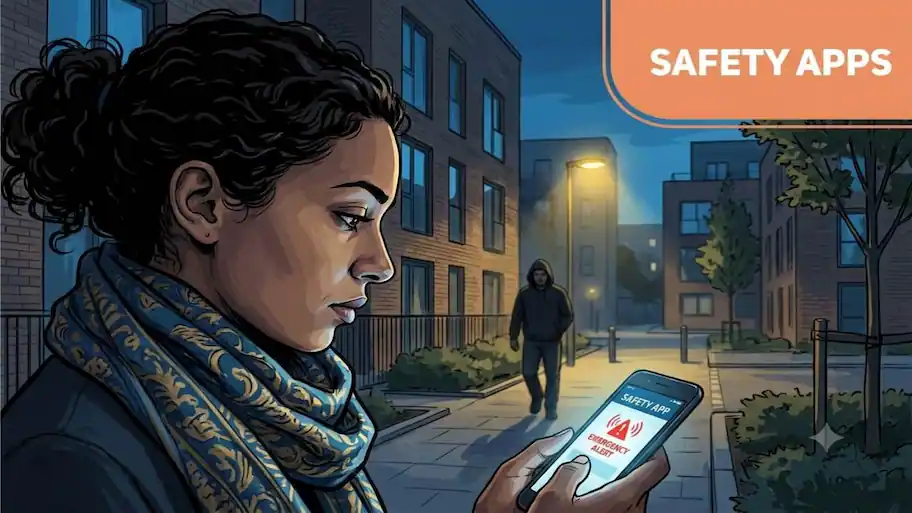
New Delhi: The city is preparing a dedicated Student Safety App for women students that will allow them to send an SOS alert to the police and family members, share their live location and report unsafe spots around their colleges.
Police patrols, Pink Booths near colleges
The plan was discussed at a meeting chaired by Lieutenant Governor Taranjit Singh Sandhu with Delhi University officials, principals of women’s colleges and senior officers from the police, Municipal Corporation of Delhi (MCD), Public Works Department (PWD) and other departments. The incident led LSR to hold classes online for a day, while students raised safety issues about routes outside the college campus. The proposed app will give students a direct way to report a problem. A dedicated SOS button will send a real-time alert to the police and the user’s family. Students will also be able to share their live location with friends and relatives when they feel unsafe. Another feature will allow students to report dark spots based on their own experiences. This will help authorities identify poorly lit or unsafe stretches around colleges and take action. The app is also expected to provide access to the nearest police Pink Booth and the nodal officer assigned to the college. Students will also be able to report problems involving e-rickshaw, cab and bus drivers through the app. The plan is aimed at making it easier for students to report incidents during their daily commute, especially on roads and stretches outside college gates. The safety app is one part of a larger set of measures discussed at the LG’s meeting. Complaints about obscene flashing and other incidents around campuses were also raised. The administration has asked departments to increase police patrolling around sensitive areas and add more Pink Booths near colleges. Police presence will also be increased during evening hours. Lighting in parks and on routes used by students will be checked and repaired. The authorities have also been asked to identify unauthorised structures and encroachments around colleges and remove them. The issue of last-mile transport has also been included in the plan. E-rickshaw connectivity and fares will be looked at, with the aim of making travel between colleges, transport points and residential areas easier for students. This will allow officials to check whether lighting repairs, police patrols, Pink Booths, transport measures and other safety steps have been implemented around the colleges. The safety app is expected to add a direct digital channel for students as these physical measures are put in place. It will allow students to report unsafe locations and seek help without having to first identify which department should handle the complaint. The latest measures follow a week of student protests after the gang-rape at Kalkaji. Students at several Delhi University colleges have called for safer roads, better lighting, stronger policing and improved safety outside college campuses.
The app is being planned after the gang-rape of a 17-year-old girl at Aastha Kunj Park near Kalkaji Mandir. The park is around 2 kilometres from the Lady Shri Ram College for Women. Principals from 10 women’s colleges told the administration about dark stretches, poor lighting, unsafe parks, last-mile connectivity problems and vehicles crowding college gates. The steps taken for students will be reviewed every 15 days, according to the plan discussed at the meeting.
Every college to get a safety nodal officer
Each college will have a nodal officer responsible for student safety. The officer will be the point of contact for complaints involving harassment and security around the campus. Officials have also been asked to look at areas close to college boundaries where students may face problems. These include taxi stands, toilets, unauthorised vendors and slopes near college walls. The plan is to clear such spots where people can gather without proper supervision. The Delhi administration has also ordered safety checks across the city. The exercise includes checking lighting, cleanliness, security arrangements and police patrolling. The Delhi Police also began checking parks and other public areas for broken lights, poorly lit stretches and faulty CCTV cameras. An inspection of Aastha Kunj found no CCTV cameras in the park, while some cameras at the gates were not working.
On September 23, Sandhu directed a comprehensive audit of Delhi’s parks after the Aastha Kunj Park case. The park has 29 gates spread across about 142 acres.
