
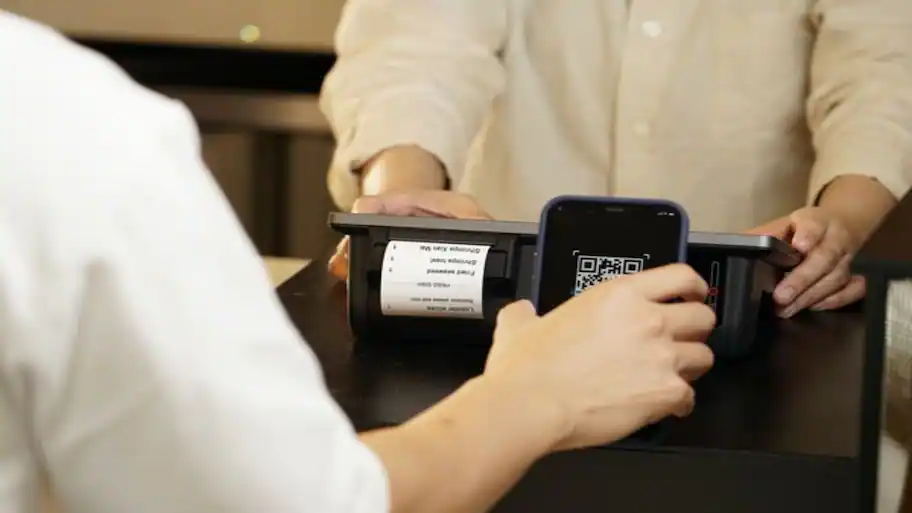
New Delhi: New UPI charges are set to change the way some large digital payments are handled in India. The National Payments Corporation of India (NPCI) has announced a Merchant Discount Rate (MDR) of 0.4% on specified person-to-merchant UPI transactions above Rs 2,000 from October 15, 2026.
India’s UPI System to Implement Merchant Discount Rate
The Finance Ministry announced that approximately 96% of person-to-merchant UPI transactions will remain unaffected by the upcoming changes to the system. As part of this update, the government has mandated that banks ensure merchants do not transfer the Merchant Discount Rate (MDR) onto customers. This development follows a report by Reuters indicating that the MDR will be applied to larger merchant payments within India’s Unified Payments Interface (UPI).
The Finance Ministry has advised users to refer to official information from the government, NPCI and banks.
Merchants should check their applicable payment category and billing arrangements before the new rules take effect.
Will UPI apps charge customers?
The announcement has led to confusion among UPI users, many of whom depend on QR codes to pay for everything from groceries and restaurant bills to electricity and shopping. The most important detail is that the new MDR is a merchant-side charge. The customer will not be asked to pay it directly under the new system. MDR is the fee charged within the digital payment system for accepting a payment. The money is shared among participating banks, payment service providers and UPI application providers. This includes many local businesses, including small grocery shops, tea stalls and street vendors. The exact classification of a merchant will depend on the payment system and applicable rules. This is a merchant-side charge, not an additional fee for the customer. The applicable category will depend on the merchant and payment classification. The new system also includes a separate rate for capital market transactions. The lower charge is intended to support retail participation in formal financial markets. The Finance Ministry has clarified that MDR is not a tax and is not a charge collected by the government or NPCI. It is distributed among participants in the payment ecosystem. UPI app providers are also prohibited from imposing platform fees or hidden charges on customers for these payments. Users will continue to use UPI through apps such as PhonePe, Google Pay, Paytm and BHIM without a new direct MDR charge. Five per cent of total MDR collections will go towards a dedicated fund to promote UPI acceptance among small businesses and support expansion in underserved areas. The new rule does not mean every UPI payment will carry a fee.
Because of the exemptions, everyday users are expected to face limited impact. The Finance Ministry clarified on September 15 that UPI will continue to be free for person-to-person transfers, regardless of the amount sent. Payments to merchants up to Rs 2,000 will also be exempt from MDR. Under the new rules, a qualifying merchant receiving Rs 3,000 through UPI will incur an MDR of Rs 12. A payment of Rs 10,000 will attract Rs 40. The rate is capped at Rs 300 per transaction for payments of Rs 75,000 or more. The cap means a payment of Rs 1 lakh or Rs 2 lakh will not attract more than Rs 300 MDR under this structure. A person buying tea for Rs 20, paying Rs 100 for vegetables or sending Rs 500 to a friend will not face a new UPI charge. Person-to-person transfers are free, and merchant payments up to Rs 2,000 are outside the MDR system. Small merchants receiving up to Rs 1 lakh a month through UPI QR payments under the small-merchant classification will also continue to receive mandatory zero-MDR protection. Some sectors will have a separate flat MDR in place of the standard 0.4% rate. A flat MDR of Rs 5 per transaction will apply to payments above Rs 2,000 in specified essential and low-margin sectors, including railways, telecommunications, insurance, fuel and agricultural inputs. For example, a qualifying petrol pump payment of Rs 5,000 will incur Rs 5 in MDR under the special category. A qualifying insurance premium payment of Rs 10,000 will also attract Rs 5. Payments relating to mutual funds, securities, stockbrokers and dealers will attract an MDR of 0.02%, capped at Rs 300 per transaction. A Rs 1 lakh mutual fund payment, for instance, would carry an MDR of Rs 20 under this rate. The main change is for selected merchant payments above Rs 2,000 from October 15, 2026. Customers have a few straightforward points to keep in mind – person-to-person transfers are free, payments up to Rs 2,000 to merchants are outside MDR and small merchants covered by the zero-MDR rules continue to receive protection. The latest official updates include the Finance Ministry’s September 15, 2026 announcement that UPI will continue to be free for person-to-person payments, while 96% of merchant transactions will not be affected by the new MDR rules. The Department of Financial Services also issued the official MDR announcement and FAQs on September 15.
The Finance Ministry says the system is intended to support the operation and expansion of UPI, including investment in infrastructure and cybersecurity. The government says the revenue will help support UPI infrastructure, cybersecurity and innovation.
