
By Sunny Singh
This outcome proved that the progress seen across Uttar Pradesh today is neither an accidental economic turn nor campaign rhetoric; it is the deliberate, systematic execution of the exact blueprint articulated in Parliament nine years ago. That farewell address demonstrated that politics is not an exercise in abstraction; it is the practical intersection of vision and execution. An idea remains theoretical until it is operationalized through political action. This empirical transformation highlights a fundamental shift in Indian political economy; while national leadership, organizational depth, and cultural nationalism provide the structural foundation for elections, the state leadership remains the important performance variable. In Uttar Pradesh, Yogi Adityanath redefined the dynamic by proving that clean administration and development-focused governance yield decisive political dividends. In doing so, the performance-driven synergy of the modern ‘MY’ (Modi-Yogi) double engine dismantled and replaced the vintage, identity-driven ‘MY’ (Muslim-Yadav) caste arithmetic that had constrained the state for decades. Furthermore, this model evolved classical welfare economics, moving beyond the Darwinian logic of ‘survival of the fittest’ and toward a commitment to the ‘survival of the weakest’. By advancing Pandit Deen Dayal Upadhyaya’s vision of Antyodaya into an active framework of productive empowerment, the state’s governance has systematically expanded individual agency and institutional freedom rather than relying on passive poverty management. The ultimate validation of this governance paradigm lies in its democratic endurance. By synthesizing its ancient civilizational identity with modern infrastructure and economic expansion, Uttar Pradesh has fundamentally altered its socio-economic trajectory. Syama Prasad Mookerjee Research Foundation. The views expressed in this article are those of the author and do not necessarily reflect the official policy, editorial stance, or position of Zee News, its management, or its parent company.)
In a state long accustomed to volatile electoral shifts and entrenched anti-incumbency, Yogi Adityanath broke decades of precedent with a historic re-election victory in 2022, confirming that the electorate decisively prioritized the rule of law over mafia raj, hooliganism, nepotism, appeasement and favouritism.
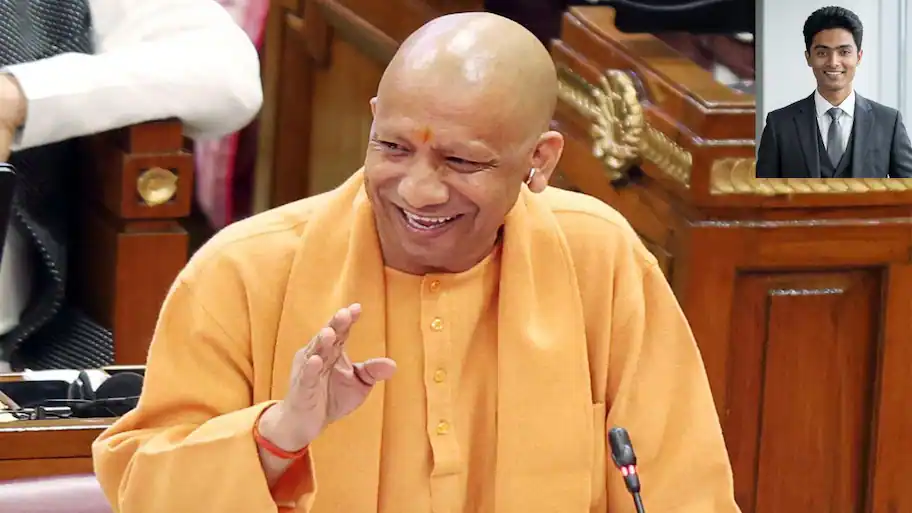
In his Lok Sabha speech, Yogi Adityanath outlined a dual promise that challenged traditional political discourse: “Our government will be committed to running a government for the poor, for the farmers, for the youths, and for the women without any discrimination”, while pledging to construct an administration entirely “corruption-free and free of riots. Most importantly, he tied this administrative blueprint directly to Prime Minister Narendra Modi’s vision, promising that Uttar Pradesh would ultimately become the Prime Minister’s “dream state”. In doing so, it has fulfilled the singular promise made at the heart of that parliamentary farewell address: turning vision into reality, and transforming Uttar Pradesh into the true “dream state” of Prime Minister Narendra Modi. (The author is a Research Scholar at the Department of Political Science, University of Delhi, and Research Associate at the Dr.
